QUICK ANSWER
Telogen effluvium is diffuse hair shedding that occurs when illness, surgery, childbirth, emotional stress, marked weight loss or another trigger disturbs the normal hair cycle. Shedding commonly becomes noticeable around three months later. Acute telogen effluvium usually improves after the trigger resolves, although density takes longer to return.
KEY TAKEAWAYS
- Telogen effluvium (TE) is sudden, all-over shedding — not bald patches.
- It’s triggered by a shock to the system, and shedding is delayed 2–3 months.
- Acute TE usually improves after the trigger resolves, although visible density can take many months to return.
- It usually causes diffuse loss of density rather than distinct bald patches.
- Persistent, patchy or worsening loss needs a GP — TE isn’t the only cause.

Let me start with the reassuring part: acute telogen effluvium usually improves after its trigger has resolved, and regrowth is expected. Sudden, dramatic shedding can still be frightening — especially when you see handfuls in the shower or strands on the pillow. A correct diagnosis matters, though, because other conditions can also cause diffuse or sudden hair loss.
That name is telogen effluvium. Let me explain exactly what’s happening, why it’s so alarming, and — the part that matters most — when it stops.
What telogen effluvium actually is
Your hair grows in a cycle. At any given time, most of your hairs (around 85–90%) are in the active growing phase, while a small minority are in the resting phase, called telogen, before they naturally shed and are replaced. This is normal and constant — everyone sheds a bit every day.
Telogen effluvium happens when something shocks a large number of your follicles into that resting phase all at once, ahead of schedule. Weeks later, those hairs all shed together — far more than the usual daily trickle. The result is sudden, diffuse thinning: hair coming out all over the scalp, not in patches. It’s the volume and suddenness that makes it so frightening, even though the mechanism is your hair cycle being temporarily knocked out of rhythm, not destroyed.
The telogen effluvium delay that confuses everyone
Here’s the detail that catches almost everyone out: the shedding is delayed. Telogen effluvium typically shows up two to three months after the triggering event — sometimes longer. So the stressful period is often over and forgotten by the time your hair starts falling.
This delay is why telogen effluvium leaves so many women feeling blindsided (“nothing’s even wrong right now!”) and why the cause can be so hard to spot. If you’re shedding heavily today, the trigger was likely a couple of months ago. Common triggers include:
- A high fever or significant illness (including infections)
- Surgery or a general anaesthetic
- Childbirth (post-partum shedding is classic telogen effluvium)
- A major emotional stress — bereavement, divorce, job loss, acute anxiety
- Crash dieting or a sudden nutritional shortfall
- Starting or stopping certain medications
- A significant hormonal shift
Cast your mind back roughly three months from when the shedding began. A possible trigger may become clearer, although some people do not identify one.
The reassuring part: telogen effluvium is reversible
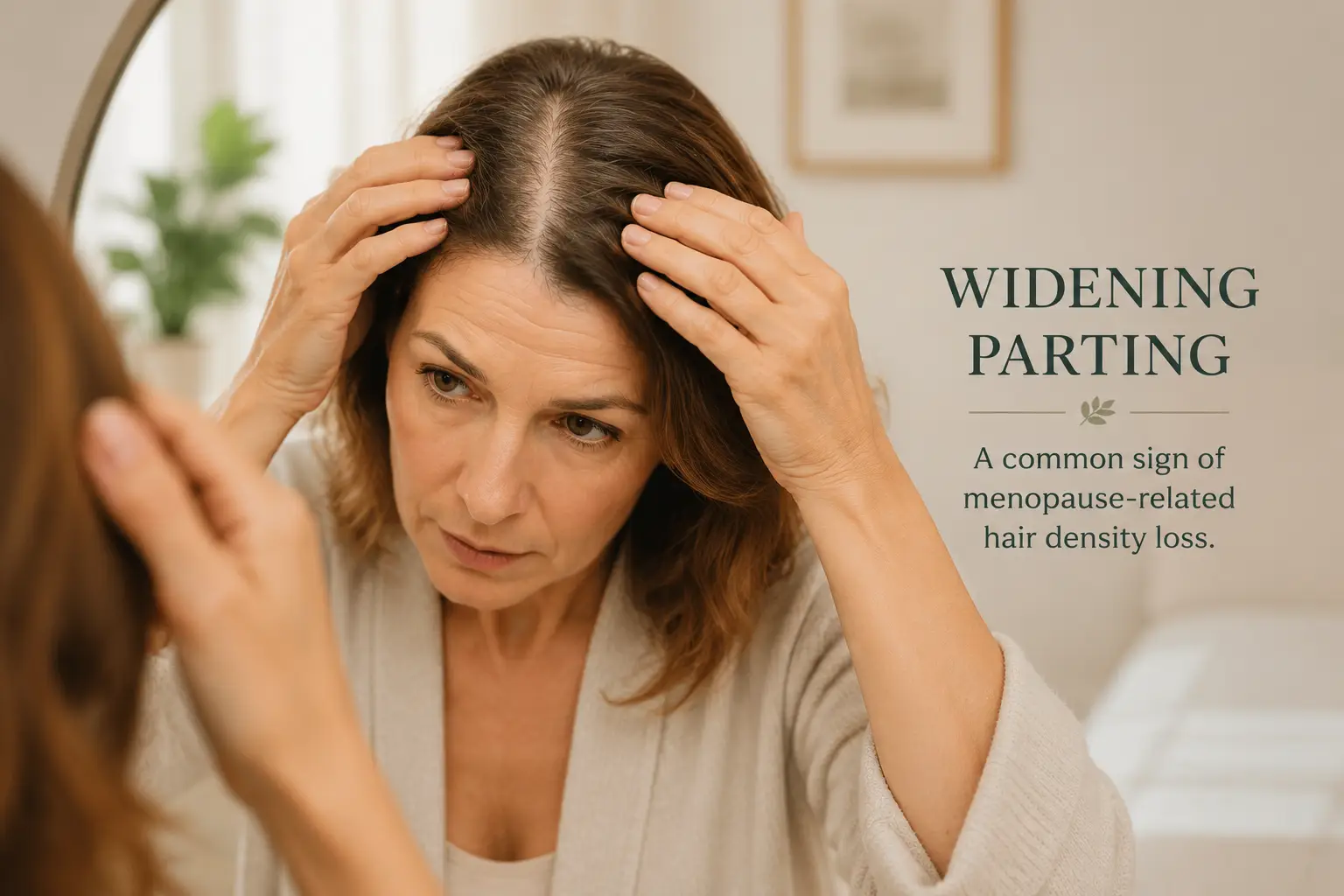
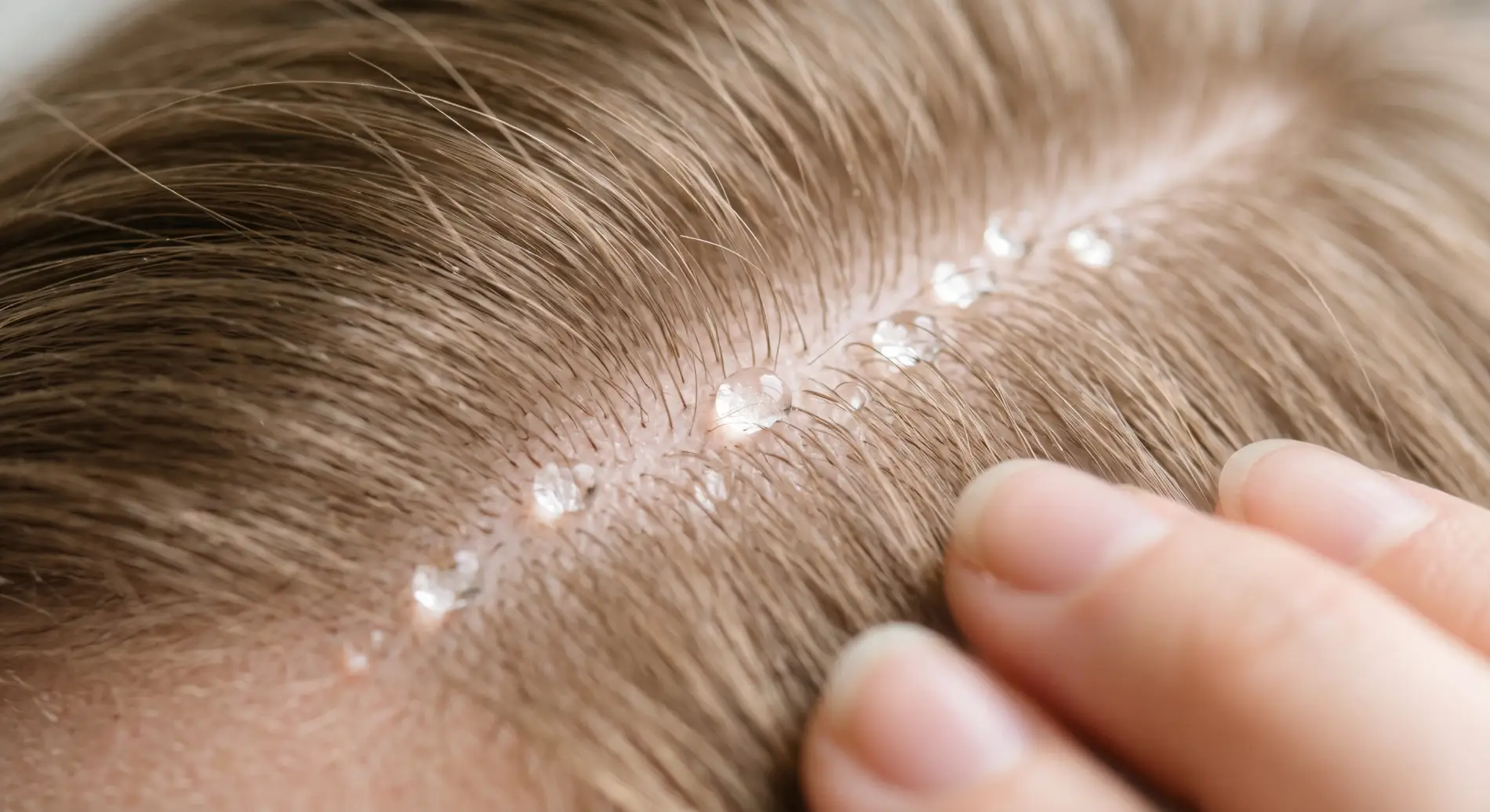
This is the heart of it. In common acute telogen effluvium, follicles are not scarred or destroyed. Density may temporarily fall — your ponytail may feel thinner and your parting may look wider — before new hairs have had enough time to add visible volume.
Once the trigger behind your telogen effluvium has passed and been resolved, shedding usually settles within a few months, and regrowth follows. Many people notice the shedding easing around three to six months from when it started, with new baby hairs coming through after that. It can take a while for full density to return, and patience is genuinely hard when you’re anxious — but the direction of travel is recovery.
How to tell telogen effluvium apart from other hair loss
Telogen effluvium has a recognisable signature, and knowing it can be reassuring:
- It’s diffuse, not patchy. Hair thins all over, rather than in distinct bald spots. Round patches of complete loss point to something different (alopecia areata) and need a doctor.
- It’s shedding, not gradual thinning. TE is rapid and dramatic. Female-pattern hair loss, by contrast, is a slow thinning over years, usually at the crown and parting.
- It usually preserves the overall hairline. A receding or changing hairline, scarring, or distinct bald areas suggests that another diagnosis should be considered.
That said — and this matters — you can’t always self-diagnose, and TE isn’t the only cause of shedding. Which brings me to the important bit.
When telogen effluvium needs a doctor (please go)

Reassurance is not the same as “ignore it.” See a GP if shedding is severe, lasts beyond six months, appears in patches, or is accompanied by scalp changes or other symptoms. Iron deficiency and thyroid disease are among the possible causes a clinician may consider. Examination, history and any blood tests should be tailored to your circumstances rather than treated as a universal panel.
So: be reassured, and get checked. Both, not either.
What actually helps telogen effluvium while you wait
The frustrating truth is that the main “treatment” for telogen effluvium is identifying and removing the trigger, plus time and reassurance. But you’re not powerless:
- Address the trigger with appropriate help. Recover from illness, avoid extreme dieting and discuss suspected deficiency or medication-related shedding with a clinician.
- Eat a balanced diet. Adequate energy and protein matter, and marked weight loss or extreme dieting can trigger TE. Take iron or other supplements only when a clinician identifies a need.
- Be gentle. Don’t add breakage on top of shedding — loosen tight styles, handle wet hair kindly, ease off heat.
- Keep scalp care comfortable. Gentle massage may feel relaxing, but it has not been shown to treat telogen effluvium or accelerate regrowth.
- Try not to panic-shop. Frantically switching products rarely helps and can irritate the scalp. Steady, gentle care wins.
Acute and chronic telogen effluvium: the difference matters
Acute telogen effluvium commonly starts around three months after a trigger. The shedding phase often lasts three to six months, after which new growth becomes more apparent. Individual timelines vary, and the original trigger is not always obvious.
Chronic telogen effluvium is less common and behaves differently. It lasts longer than six months, often fluctuates in waves, and frequently has no single obvious trigger. Density can look reduced overall, particularly at the temples, although the hairline itself is preserved.
The distinction matters because shedding beyond six months warrants reassessment. A clinician may review possible ongoing triggers, medication, iron status, thyroid disease and other diagnoses, including patterned hair loss that can coexist with TE.
If you are past six months and still shedding, stop waiting it out and go back to your GP. Persistence is the signal that something needs finding.
How much shedding is actually normal?
Daily shedding varies. The NHS gives 50 to 100 hairs a day as a general reference, while the British Association of Dermatologists notes a wider normal range of 30 to 150. Counting individual hairs is rarely a reliable way to diagnose telogen effluvium.
Counting is less useful than it sounds. Wash frequency changes when loose hairs are noticed, so a wash after several days may look more dramatic than a daily wash. That observation cannot distinguish normal shedding from telogen effluvium on its own.
Longer strands can also make the same number of shed hairs look more dramatic in a brush or drain. Focus on change from your own baseline rather than comparing the visual volume with someone else’s.
The more useful question is whether your ponytail has thinned, whether your parting has widened, and whether the shedding is genuinely heavier than your own baseline. Telogen effluvium involves a real, noticeable increase, not a bad day in the shower.
The tests worth asking for
There is no single universal blood panel for every person with shedding. Depending on your history and examination, a clinician may consider tests such as a full blood count, iron studies or thyroid function.
Ferritin reflects iron stores and may be relevant when iron deficiency is suspected, including in people with heavy menstrual bleeding or restrictive diets. Discuss the appropriate tests and interpretation with your clinician rather than insisting on a particular threshold.
Depending on your history, other investigations may be appropriate. Review medicines and hormonal treatments with your prescriber, especially changes made in the months before shedding began. Do not stop a prescribed medicine on your own.
Take a written timeline to the appointment: when the shedding started, what happened two to three months before that, what you have changed, and what medication you take. Ten minutes goes much further with a timeline than with a description.
The regrowth timeline nobody explains properly
Once the trigger has resolved, the shedding phase commonly settles over three to six months. New growth takes time to become visible and longer still to restore noticeable density.
Short, wispy hairs may eventually become visible along the parting or hairline, but there is no single month when everyone should see them. Their absence at an early checkpoint does not by itself show that regrowth has failed.
Over subsequent months, new hairs gradually become long enough to contribute to volume. The time needed to approach previous density depends on hair length, the duration of shedding and whether the trigger has fully resolved.
Visible recovery can take many months even after shedding improves. Monthly photographs taken in similar lighting are more useful than judging changes day by day.
What does not help telogen effluvium
Panic-buying products. Cosmetic shampoos, thickening sprays and serums may change how the hair looks or feels, but they do not treat the underlying trigger or reliably shorten telogen effluvium. The British Association of Dermatologists notes that medication does not speed the regrowth process in typical TE.
Supplements you do not need. Iron and other supplements can cause harm when taken unnecessarily, and excess selenium can itself contribute to hair loss. Use supplements only when a clinician has identified a need or advised them for a restricted diet.
Restrictive dieting. Marked weight loss and extreme dieting are recognised triggers for telogen effluvium. Avoid further restriction and seek dietetic or medical advice if adequate nutrition is difficult.
Constant counting. Collecting and tallying shed hairs can increase anxiety without diagnosing the cause. If monitoring is useful to you, consider a photograph no more than monthly in consistent lighting.
And changing everything at once. Multiple simultaneous product and supplement changes make it difficult to know what affected symptoms and may add irritation or risk. Keep cosmetic care simple and follow clinician-guided treatment for any identified cause.
Living with the anxiety of telogen effluvium
This deserves its own section, because the psychological weight of shedding is routinely underestimated and rarely acknowledged in a consulting room. Watching your hair come out is genuinely distressing, and being told it is temporary does not make it feel temporary.
Hair shedding can create a difficult cycle of worry, checking and reassurance-seeking. Reducing those behaviours may improve wellbeing, but it should not be presented as a proven method of stopping telogen effluvium.
A few practical steps may help with coping. Put the daily hair count away and, if useful, take one photograph a month. Limit late-night reassurance-seeking and consider telling someone you trust what is happening.
Choose practical options within your control: a cut that suits your current density, comfortable cosmetic care and a follow-up plan with your GP. If low mood or anxiety is becoming significant, say so at your appointment. The mental-health impact of hair loss is a legitimate reason to seek support.
A calm cosmetic routine while recovery takes time
Disclosure: Nunu Moor is our own cosmetic scalp-and-hair tonic, currently in development. It is intended for everyday scalp care, heat protection and light styling; it is not a treatment for telogen effluvium, does not address its underlying causes and should not replace medical assessment.
If a simple cosmetic scalp-and-hair routine would suit you, you can join the Nunu Moor launch waitlist for early access and founder pricing. Joining does not imply that the product prevents shedding or promotes regrowth.
Acute telogen effluvium usually resolves without medical treatment once the trigger has passed, although visible recovery takes time. Persistent or atypical shedding deserves reassessment rather than further waiting or panic-buying.
This post covers a distressing topic. If your hair loss is causing significant anxiety or low mood, speaking to your GP about both your hair and how you are feeling is a sensible step.
FAQ:
What is telogen effluvium?
It’s temporary, diffuse hair shedding that happens when a stressor pushes many follicles into the resting phase at once. They shed together weeks later, causing sudden all-over thinning.
Is telogen effluvium reversible?
Usually. Acute telogen effluvium generally improves after the underlying trigger has passed. Persistent shedding or a pattern that suggests another diagnosis should be reassessed.
How long does telogen effluvium last?
Shedding often eases within three to six months once the trigger is resolved, with regrowth following, though full density can take longer to return.
Why did my hair start shedding months after a stressful event?
The shedding in telogen effluvium is delayed, typically appearing two to three months after the trigger, which is why the cause is often hard to spot.
When should I see a doctor about shedding?
See a GP if shedding is severe, lasts beyond six months, is patchy, or comes with scalp changes or other symptoms. Iron deficiency, thyroid disease and other forms of hair loss may need to be considered.
Related reading on telogen effluvium and shedding
- Stress and hair loss: how to break the shedding loop
- Menopause hair thinning: the oestrogen drop explained
- The one-minute scalp ritual: no grease, no extra wash
Sources and further reading: NHS — Hair loss and the British Association of Dermatologists — telogen effluvium. This article is general information, not medical advice.