
Menopause Hair Regrowth: An Honest Timeline
QUICK ANSWER Menopause hair regrowth depends on the cause. Hair lost to something temporary — stress, illness, low iron, a thyroid problem — usually grows

QUICK ANSWER Menopause hair regrowth depends on the cause. Hair lost to something temporary — stress, illness, low iron, a thyroid problem — usually grows

QUICK ANSWER Thin hair volume comes mostly from the cut: taking weight out of long lengths lets fine hair lift at the root. Add softer,
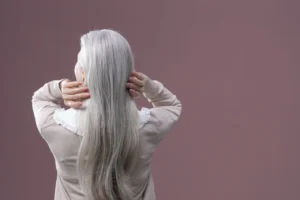
QUICK ANSWER Grey hair texture changes in menopause because a strand that has lost its pigment is often coarser, drier and more porous, and falling

QUICK ANSWER Does biotin work for hair? Only if you were genuinely short of it, and true biotin deficiency is rare in people who eat
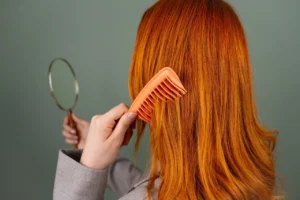
QUICK ANSWER Female pattern hair loss is gradual thinning across the top of the head and the parting, driven by genes and hormones. The front
QUICK ANSWER Thyroid hair loss is diffuse thinning caused by an underactive or overactive thyroid. It looks almost identical to menopausal thinning, and the other
QUICK ANSWER HRT and hair loss are linked because oestrogen helps keep hair in its growing phase, so some women find their hair improves on
QUICK ANSWER Menopause hair density drops for two reasons at once. Falling oestrogen means fewer hairs stay in their growing phase, and androgens such as
QUICK ANSWER Perimenopause hair changes happen because oestrogen falls, which shortens the growing phase of each hair. You shed sooner, and the new hair comes