| QUICK ANSWER Menopause hair regrowth depends on the cause. Hair lost to something temporary — stress, illness, low iron, a thyroid problem — usually grows back once the cause is sorted. Thinning driven by the hormonal shift itself is gradual and harder to reverse, but it can often be slowed and supported. Either way, visible regrowth takes months. |
“Will it grow back?”
Every other question about hair loss is really this one wearing a different coat. I’d like to answer it properly — not with a promise, and not with doom either — because the honest answer is more hopeful than most women expect.
But it starts with another question: why did it go?
It Depends on the Cause
Broadly, hair loss in midlife falls into two groups. Hair that was pushed out by something temporary. And hair that’s thinning gradually because of the hormonal changes of menopause. Very often a woman has a bit of both, which is why it’s worth finding out.
What Usually Comes Back
A great deal of the hair loss I see turns out to be temporary, and that’s the good news about menopause hair regrowth nobody mentions.
Shedding after illness , surgery, a crash diet or a very stressful stretch is usually telogen effluvium — the follicles rest, the hairs fall, and then they grow again. The DermNet page on telogen effluvium explains the cycle.
Hair thinned by low iron stores often recovers once the iron is corrected — I’ve written about ferritin and hair loss because it’s so common and so often missed. The same goes for thyroid problems and low vitamin D once they’re treated.
That’s why I keep sending people for blood tests. If the cause is one of these, the outlook for regrowth is genuinely good.
Menopause Hair Regrowth When the Cause Is Hormonal
Now the honest part. Thinning that comes from the hormonal shift itself — oestrogen falling, follicles gradually producing finer hairs — is a slow process, and it isn’t something you simply reverse. I go through the mechanism in perimenopause hair changes .
But slow and gradual is not hopeless. This kind of thinning can often be slowed and stabilised, and the earlier you act, the more you keep. If it’s female pattern hair loss , there are treatments worth discussing with your GP or a dermatologist.
The realistic aim here is usually to protect the density you have and make the most of it, rather than to get back the hair you had at thirty. That isn’t defeatist. It’s what lets you feel progress rather than constant disappointment.
What the Timeline Really Looks Like
Hair grows roughly a centimetre a month. That one fact explains why everything feels so slow.
After a temporary cause is sorted, menopause hair regrowth tends to follow the same pattern. The shedding settles first. Then you’ll see short new hairs around the hairline and parting — clients often think it’s breakage or frizz at first. Then, slowly, those hairs lengthen and the hair starts to feel fuller. Six months to a year before it really shows is normal.
Any treatment or routine deserves a fair trial of several months before you judge it. If you’re three weeks in and panicking, that’s ordinary hair biology, not failure.
One tip: photograph your parting in the same light once a month. Not daily. Daily checking only feeds the worry. Monthly pictures side by side tell you the truth.
How to Give It the Best Chance
Find the cause. Blood tests first: ferritin, thyroid, vitamin D, full blood count. The NHS page on hair loss explains when to see your GP.
Feed it. New hair needs protein and iron. Recovery is not the time to diet.
Protect it. Short new hairs snap easily. Loosen tight styles, comb wet hair gently, ease off the heat.
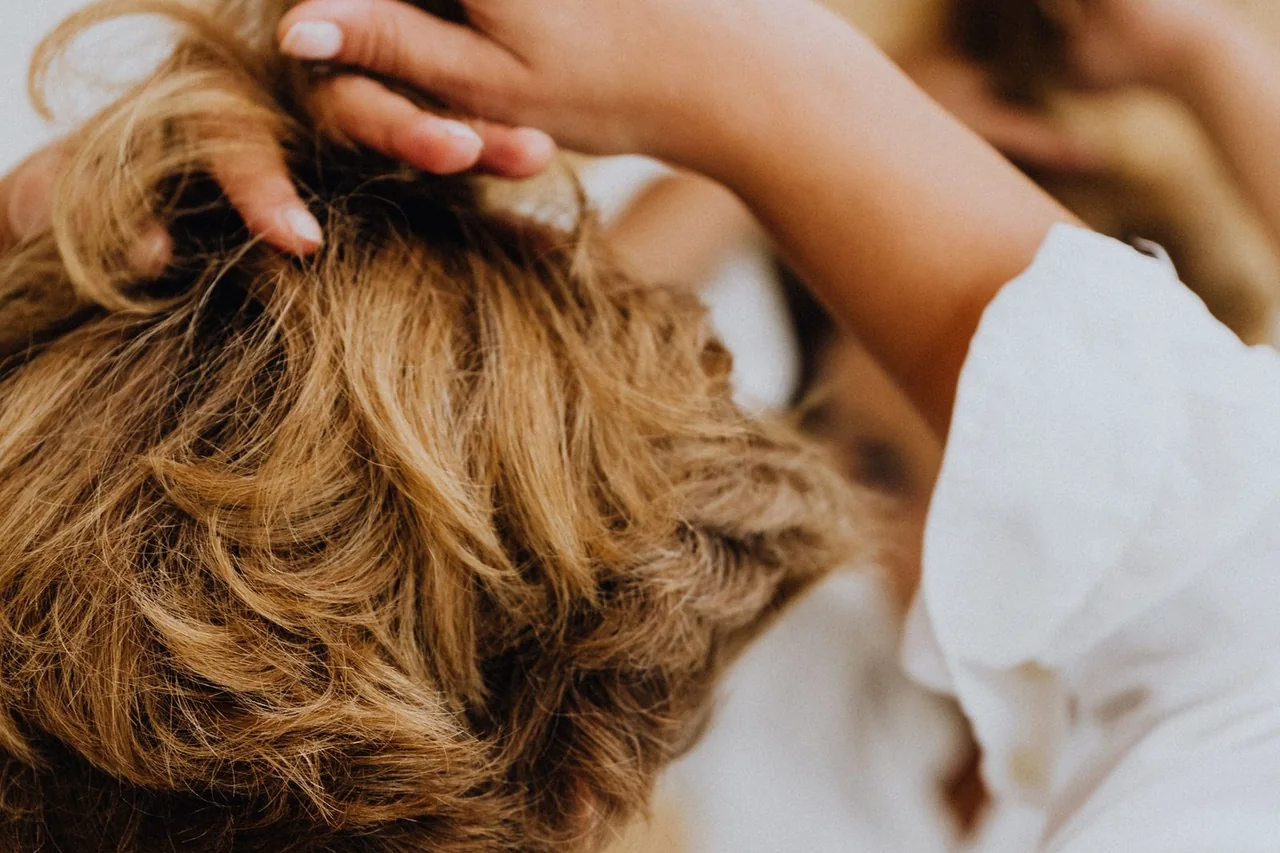
Look after the scalp. It’s where every new hair starts. Keep it calm and clean, and give it a minute of fingertip massage.
Be patient with yourself. Worry doesn’t help hair, and it makes the waiting harder. Sleep, food, kindness — it sounds too simple, but it’s what I’ve seen work.
That scalp-first support is what Nunu Moor is for: a botanical scalp and hair tonic, light enough for every day. It won’t regrow hair on its own, and I’d never claim it does. It isn’t out yet — join the Nunu Moor waitlist to hear when it is.
So, menopause hair regrowth: often yes, when something temporary is behind it. Slowed and supported, when it’s hormonal. Either way, it starts with finding out which — and with a bit more patience than any of us would like.
General information, not a diagnosis. See your GP to find the cause of hair loss.
Frequently Asked Questions
Can hair grow back after menopause?
Often, if the loss was caused by something temporary such as stress, illness, low iron or a thyroid problem. Hormonal thinning is harder to reverse but can usually be slowed.
How long does menopause hair regrowth take?
Hair grows about a centimetre a month, so visible regrowth usually takes six months to a year after the cause is addressed.
What do new hairs look like when hair is growing back?
Short, fine hairs around the hairline and parting, which are often mistaken for breakage or frizz at first.
Is menopausal hair loss permanent?
Not necessarily. Loss from treatable causes is often reversible, and hormonal thinning can usually be slowed, especially when addressed early.
What helps hair grow back?
Finding and treating the cause, eating enough protein and iron, handling hair gently, caring for the scalp, and giving it time.