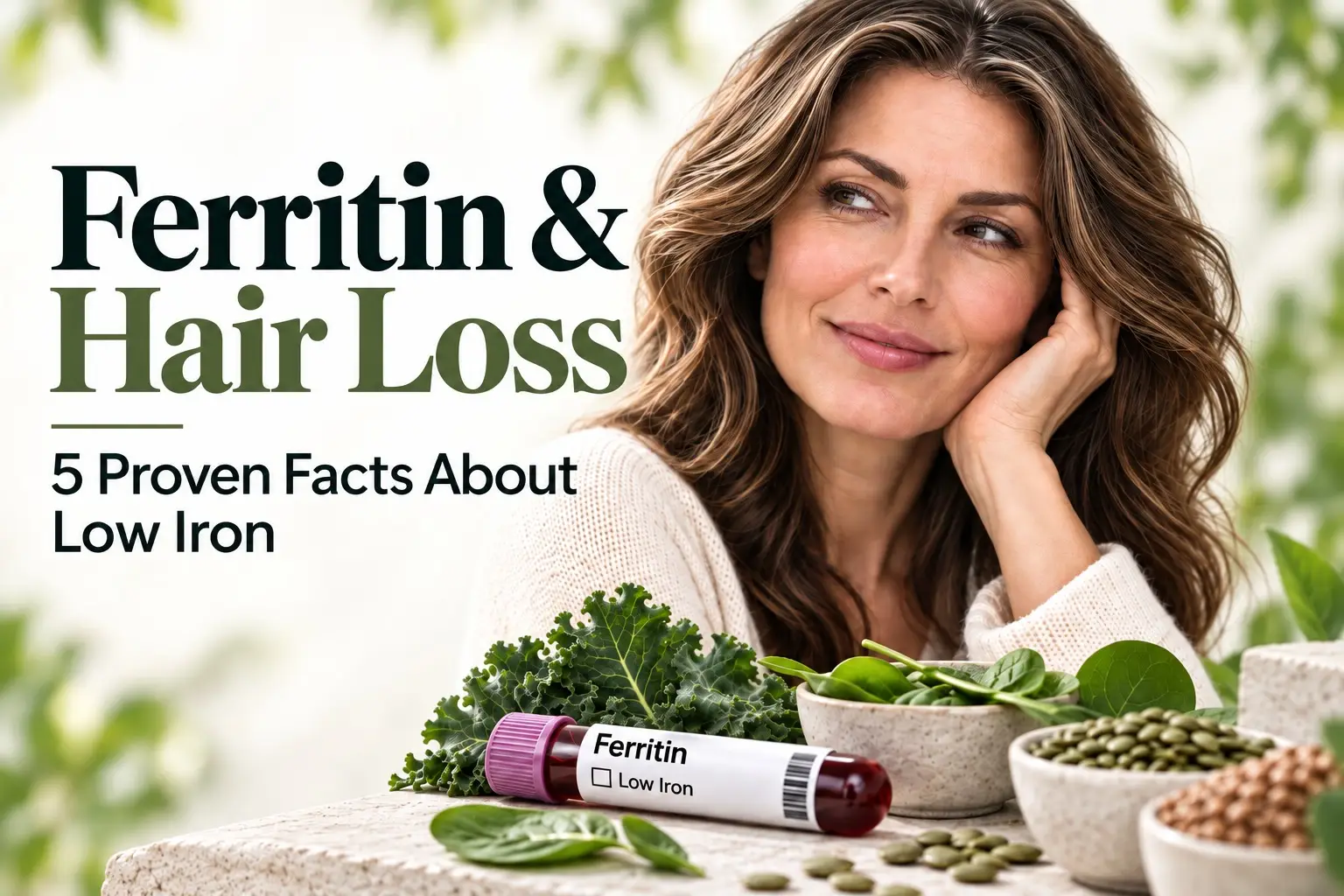
QUICK ANSWER: Ferritin and hair loss are closely linked because ferritin measures your body’s iron stores, and hair is one of the first things deprioritised when iron runs low. Low ferritin is one of the most common and most treatable causes of thinning in women — and it can exist even when a standard blood count looks normal.
Key Takeaways:
- Ferritin measures stored iron, not just circulating iron.
- Low ferritin is a leading, treatable cause of hair thinning in women.
- You can have low ferritin with a normal full blood count.
- Heavy periods and plant-based diets raise the risk considerably.
- Never self-supplement iron without testing — excess iron is harmful.
Ferritin and hair loss is the connection I most wish every woman knew about before she spent money on supplements, because low iron stores are among the commonest reasons hair thins in women — and one of the few genuinely fixable ones. Here are the five facts that matter.
1. Ferritin Measures Stored Iron, Not Just Blood Iron
This is the distinction that changes everything. A standard full blood count checks whether you’re anaemic. Ferritin measures your body’s iron reserves — the tank rather than what’s currently circulating.
You can have a perfectly normal blood count and depleted ferritin at the same time. That’s why “my bloods were fine” so often isn’t the full story.
2. Hair Is First to Be Deprioritised
Your body allocates resources by importance, and hair sits near the bottom of the list. When iron runs short, vital functions are protected and the follicles — among the most metabolically demanding structures you have — lose out first.
That’s why hair often signals a shortfall before you feel obviously unwell.
3. Ferritin and Hair Loss Affect Women Disproportionately
Two common factors drive this. Heavy or prolonged periods — very common in perimenopause — deplete iron month after month. And vegetarian or vegan diets, without careful planning, provide iron in a form the body absorbs less readily.
The NHS guidance on iron deficiency anaemia covers the risk factors and symptoms in full.
4. The Shedding Pattern Mimics Everything Else
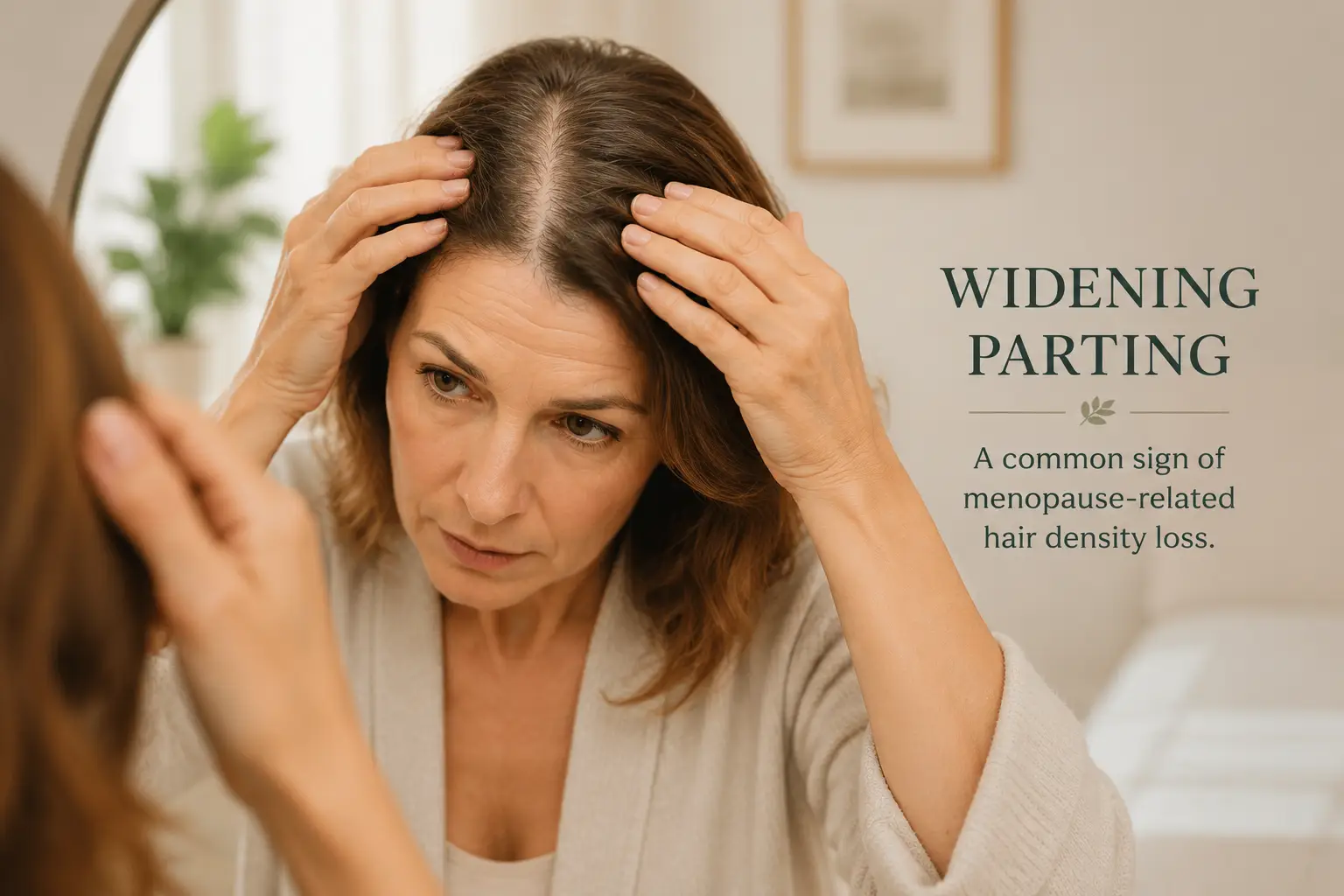
Iron-related thinning is diffuse — all over, a thinner ponytail, a wider parting — which is exactly how menopausal thinning and thyroid hair loss present too.
You cannot tell them apart by looking. This is why I keep sending readers for a blood panel rather than guessing, as covered in can menopausal hair grow back.
5. Correcting It Often Works — But Test First
Here’s the hopeful part. Where low ferritin is driving thinning, correcting it can produce real recovery over the following months, because the follicles were starved rather than damaged.
And here’s the serious caution: do not self-supplement iron without testing. Excess iron accumulates and is genuinely harmful. Iron supplementation should follow a blood test and your GP’s guidance, not a hunch.
What to Ask For
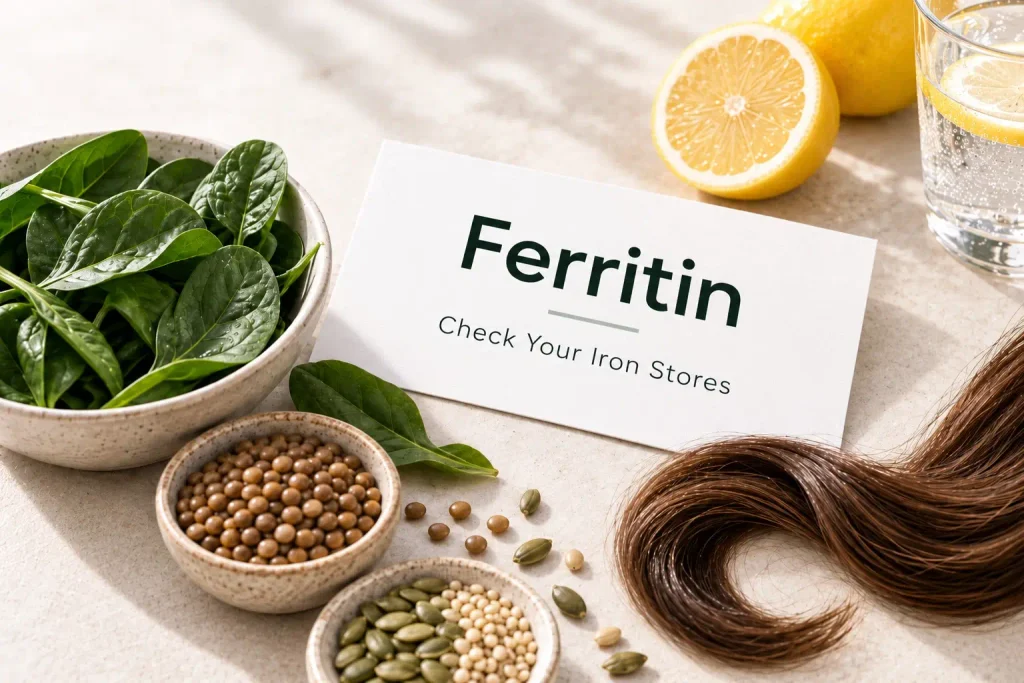
Request a panel rather than one test:
- Ferritin — the iron stores
- Full blood count — to check for anaemia
- Thyroid function — mimics the same picture
- Vitamin D — widely low in the UK
Frame it plainly: “I’m losing hair and I’d like to rule out the common treatable causes.” Mention heavy periods or a plant-based diet — both strengthen the case.
Supporting Iron Through Diet
Alongside whatever your GP advises: red meat, pulses, leafy greens and fortified cereals all contribute, and pairing plant sources with vitamin C improves absorption. Tea and coffee with meals reduce it.
The British Association of Dermatologists offers patient information on nutritional factors in hair loss.
While You Wait for Results
Support the scalp your recovering hair will grow from — gentle handling, no unnecessary breakage, and a calm environment, as in the one-minute scalp ritual.
Nunu Moor is our commercial botanical scalp-and-hair care brand. Join the Nunu Moor launch waitlist for launch updates, early access and founder pricing. The tonic is a cosmetic product, not a treatment for hair loss.
Of all the possible causes of your thinning, this is among the most treatable. It would be a genuine shame to leave it undiagnosed.
This is general information, not a diagnosis. Always consult your GP before taking iron supplements.
FAQ:
- Can low ferritin cause hair loss? Yes. Low iron stores are one of the most common and treatable causes of diffuse hair thinning in women, because hair is deprioritised when iron runs short.
- What ferritin level is needed for healthy hair? Optimal thresholds are debated and vary between labs and clinicians, so discuss your specific result with your GP rather than comparing against figures online.
- Can I have low ferritin with normal blood tests? Yes. A standard full blood count can look normal while ferritin — your iron reserves — is depleted, which is why ferritin must be requested specifically.
- Should I take iron supplements for hair loss? Not without testing. Excess iron accumulates and is harmful, so supplementation should follow a blood test and your GP’s guidance.
- How long does hair take to recover after correcting iron? Months. Hair grows roughly a centimetre a month, so give it six months to a year for meaningful improvement.