QUICK ANSWER
A scalp that looks greasy soon after washing may reflect normal sebum production, product or conditioner left near the roots, an ineffective wash, or a scalp condition such as dandruff or seborrhoeic dermatitis. There is little evidence that washing itself makes sebaceous glands “rebound” by producing extra oil. Use a mild shampoo as often as your scalp needs it, apply rich products mainly to the lengths, rinse thoroughly, and seek medical advice for persistent itch, redness, soreness or scale.
KEY TAKEAWAYS
- Greasy roots are not a sign of poor hygiene; sebum is made by glands in the skin.
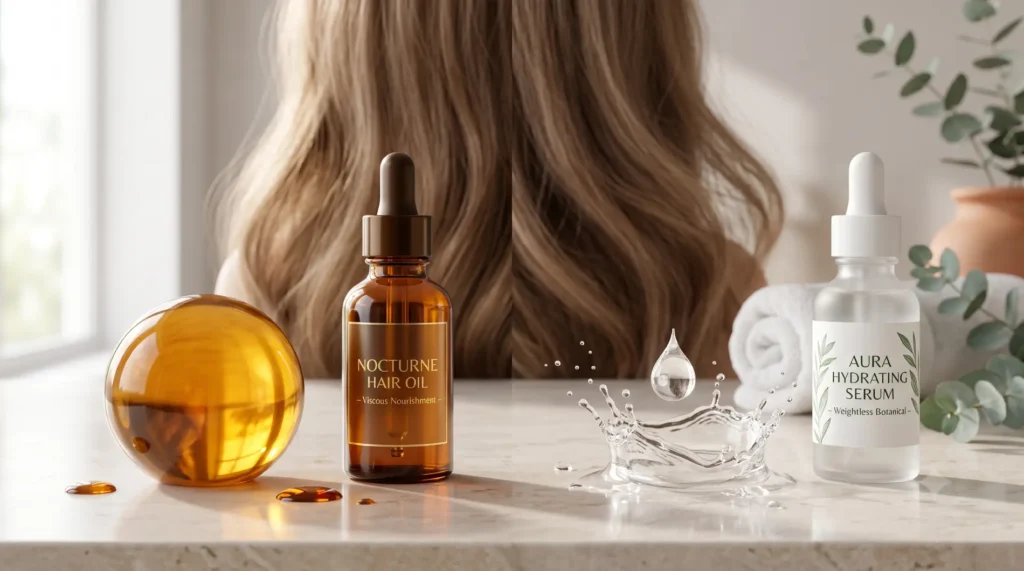
- Serums, oils, rich conditioners and styling products can make the root area look oily when applied too close to the scalp.
- “Training” the scalp by delaying washes is not well supported. Wash according to oiliness, hair type, activity and scalp comfort.
- Menopause can affect skin and hair, but greasy roots alone cannot identify a hormonal cause.
- Grease with persistent flakes, itching, redness or soreness deserves advice from a pharmacist, GP or dermatologist.
Freshly washed hair can look clean at breakfast and separated at the roots by lunch. That is frustrating, but it does not mean you washed badly or that your scalp is dirty. The useful question is not “How do I stop oil completely?” Sebum is a normal part of skin biology. The question is “What is making the oil more visible, and what routine removes it without irritating my scalp or drying my lengths?”
Why a scalp can look greasy soon after washing
Sebaceous glands release sebum onto the scalp and hair. Androgens influence those glands, but genetics, age, individual skin biology and the condition of the scalp all matter too. DermNet’s overview of sebum explains the hormonal control without reducing every oily scalp to one cause.
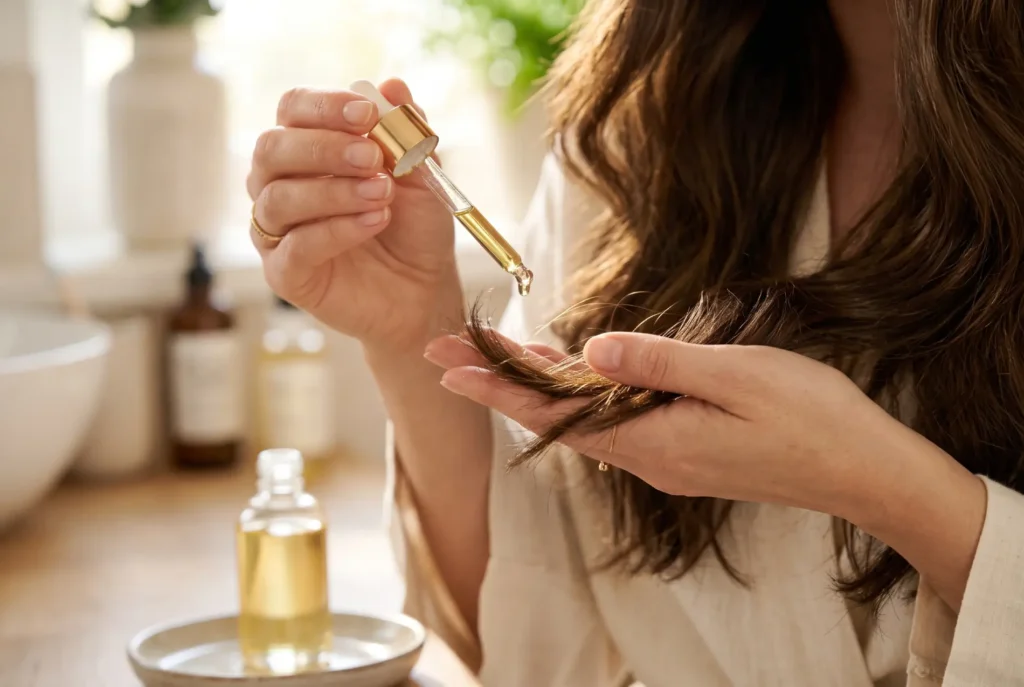
Fine or straight hair often shows oil sooner because a small amount can spread along the shaft and group hairs together. Product can create the same visual effect. A rich serum, oil, leave-in, conditioner, wax or styling cream near the roots can coat the hair, flatten it and make a clean scalp appear greasy. That is a cosmetic deposit, not necessarily extra sebum.
Residue can also remain when shampoo is concentrated on the lengths instead of the scalp, when the root area is not rinsed thoroughly, or when several layers of dry shampoo and styling product accumulate between wet washes. None of those possibilities can be diagnosed by timing alone, so treat “greasy within hours” as a clue rather than proof of one cause.
Start with product placement
For one or two wash cycles, simplify the root area. Keep oils, smoothing serums, masks and rich leave-ins on the mid-lengths and ends unless the label specifically directs scalp use. Apply conditioner where the hair needs slip and softness, then rinse carefully. If a styling product is meant for the roots, begin with less than usual and add only if needed.
This is a useful test because it changes one variable without asking you to buy anything. If the roots stay fresher, product amount or placement was probably contributing. If nothing changes, look next at cleansing frequency, technique and scalp symptoms.
Does over-washing cause rebound oil?
The familiar claim says shampoo “strips” the scalp, which then detects the loss and manufactures extra oil to compensate. That mechanism is often presented as fact, but good evidence for permanent “rebound” sebum production from ordinary washing is lacking. Harsh products can leave skin dry, tight or irritated, and rough handling can damage hair, but irritation is not the same as sebaceous glands being trained to make more oil.
A 2021 study of people without specific scalp disease found better measured and self-reported scalp outcomes with more frequent washing in the Asian populations studied, with no observed hair harm from daily washing. It was not universal evidence for every hair type, and several authors were affiliated with a shampoo manufacturer, but it directly challenges the blanket advice to wash oily hair less. Read the full study and its disclosures.
The practical rule is individual: cleanse often enough to remove oil, sweat and residue while keeping your scalp comfortable and your hair manageable. For one person that may be daily with a mild shampoo; for another it may be every few days. Curly, coily, bleached or very dry lengths may need extra protection even when the scalp benefits from regular cleansing. You can shampoo the scalp and condition the lengths rather than forcing both areas into the same routine.
A wash technique that removes oil without scrubbing

- Wet the scalp thoroughly. Dense hair can keep water away from the roots, so work in sections if needed.
- Put shampoo where the oil is. Distribute it across the scalp rather than piling it onto one spot or rubbing the lengths together.
- Use fingertips, not nails. Massage gently enough to move product through the roots without scratching the skin.
- Rinse thoroughly. Pay attention to the crown, nape and behind the ears. Residue can leave hair flat and may irritate sensitive skin.
- Condition strategically. Concentrate richer conditioner on the lengths and ends unless it is formulated and labelled for scalp use.
- Dry gently. Blot rather than rub. If you style with heat, follow the appliance and heat-protectant directions.
If one wash does not remove a heavy styling layer, a second small application may clean better than using a large amount at once. A clarifying shampoo can help with obvious cosmetic buildup, but it is not a medical treatment and there is no evidence-based schedule that suits everyone. Use it only as needed and stop if it leaves the scalp irritated.
Dry shampoo, oils and “natural” fixes
Dry shampoo absorbs some oil and can make hair look fresher, but it does not wash sebum, sweat or product from the scalp. Treat it as an occasional styling aid and follow its directions rather than repeatedly layering it in place of cleansing.
“Natural” does not automatically mean lighter or safer. Plant oils can be useful on dry lengths, but an oil applied at the root will still add oil. Likewise, undiluted apple cider vinegar, essential oils and home-mixed acids can irritate the scalp. If the aim is simply clean-looking roots, careful shampooing and product placement are more predictable than a kitchen remedy.
Is an oily scalp caused by menopause?
Hormones can influence sebaceous glands, and some people notice acne or changes in oiliness during the menopause transition. However, menopause is not a reliable diagnosis for greasy roots. Ageing and menopause are also commonly associated with lower sebum and drier skin, and the research is more nuanced than “oestrogen falls, so scalp oil rises.” DermNet’s menopause and skin guide describes dryness and itch as common concerns.
If scalp oil changes suddenly alongside new acne, irregular cycles, increased facial hair, hair thinning or a change in hormone treatment, discuss the whole pattern with a clinician. Shampoo can manage surface oil, but it cannot determine or correct a hormonal cause.
How to narrow down what is happening
Roots look coated immediately after styling. Review how much conditioner, serum, oil, heat protectant or styling cream reached the root area. Remove one product at a time so the result is interpretable.
Roots become oily on a predictable schedule without discomfort. This may simply be your normal sebum pattern. A mild shampoo at the frequency your scalp needs is reasonable; there is no prize for stretching an uncomfortable wash interval.
The scalp is greasy and flaky, itchy, red or sore. Dandruff, seborrhoeic dermatitis, psoriasis, eczema, contact dermatitis and fungal infection can overlap in appearance. Do not diagnose the condition from an online checklist.
The change follows a new product. Stop the suspected product and monitor the scalp. Burning, swelling, blistering or a spreading rash needs prompt professional advice.
The water or routine changed. A move, different shower, new shampoo or new styling habit can alter how hair feels. Test one change at a time rather than assuming the scalp itself has changed.
A practical two-week reset
For two weeks, keep the experiment simple. Wash whenever the scalp feels oily or uncomfortable using a mild shampoo. Direct shampoo to the scalp, rinse well, and keep rich conditioner and oils mainly below the roots. Use less styling product and avoid stacking dry shampoo for several days.
Record the wash date, products used, when the roots first looked oily, and whether there was itch, flaking, redness or soreness. Change only one major variable at a time. This will not “reset” sebaceous glands, but it can reveal whether application, buildup or wash frequency is contributing.
If the scalp is comfortable and the appearance improves, keep the simplest routine that worked. If symptoms persist, a pharmacist, GP or dermatologist can help distinguish ordinary oiliness from a treatable scalp condition.
When to get professional advice
Seek advice if oiliness comes with persistent or severe itching, redness, swelling, soreness, thick scale, oozing, crusting, broken skin or hair loss. The British Association of Dermatologists describes seborrhoeic dermatitis as an inflammatory condition that can be red, itchy and flaky and may need antifungal or anti-inflammatory treatment. The NHS dandruff guide advises seeing a GP when symptoms remain after a month of anti-dandruff shampoo, are severe or very itchy, or the scalp is red or swollen.
A transparent note about Nunu Moor
Disclosure: Nunu Moor is our forthcoming cosmetic product, so this is a commercial mention. It is not a treatment for dandruff, seborrhoeic dermatitis, hormonal changes or hair loss, and it should not replace medical advice.
Nunu Moor is described as a lightweight, silicone-free botanical scalp-and-hair tonic designed for scalp care, heat protection and light styling. Because it is intended as a leave-in cosmetic, anyone prone to greasy roots should still follow the label, start with a small amount and judge how their own hair responds. If that format suits your routine, you can join the Nunu Moor launch waitlist for early access and founder pricing. Joining the waitlist is optional and does not form part of the scalp-care guidance above.
FAQ:
Why is my scalp greasy so soon after washing?
Common possibilities include normal sebum production, rich product near the roots, incomplete cleansing or rinsing, and scalp conditions that produce greasy scale. Timing alone cannot identify the cause.
Can hair serum make my scalp greasy?
Yes. A serum or oil can coat and flatten root hair, especially if it is rich or over-applied. Unless the label says it is for scalp use, keep it mainly on the mid-lengths and ends.
Does daily washing make the scalp produce more oil?
There is little good evidence that ordinary washing trains sebaceous glands to overproduce oil. A harsh shampoo can irritate or dry the scalp and hair, but some oily scalps do well with daily use of a mild shampoo. Choose frequency by scalp needs and hair type.
How do I remove product buildup?
Use shampoo on the scalp, rinse thoroughly and reduce the products being layered near the roots. An occasional clarifying shampoo may help with cosmetic residue if your scalp tolerates it; follow the label rather than using a fixed universal schedule.
Can menopause make the scalp oily?
Hormonal changes can affect sebum in some people, but menopause often brings dryness and greasy roots alone do not prove a hormonal cause. Discuss a sudden change with a clinician when it occurs with other hormonal, skin or hair symptoms.
Related reading
- Scalp Ritual: 1 Simple Minute to Calm and Clean Roots
- Menopause Hair Thinning: 5 Proven Ways to Protect Density
- Seaweed for Scalp Health: 5 Essential Minerals That Help
Sources and further reading: British Association of Dermatologists — seborrhoeic dermatitis; NHS — dandruff; Punyani et al. — shampoo wash frequency; DermNet — sebum; and DermNet — menopause and the skin. This article provides general information, not medical advice.