
QUICK ANSWER
Significant physical or emotional stress can trigger diffuse shedding known as telogen effluvium, often around three months later. The shedding itself can be distressing. Recovery usually depends on identifying and addressing the trigger, allowing time for the hair cycle to reset, and getting medical advice when loss is persistent, patchy or otherwise unusual.
KEY TAKEAWAYS
- Significant stress can trigger telogen effluvium, while visible shedding can add to emotional distress.
- Telogen effluvium reflects a shift of more follicles than usual into the resting and shedding phase.
- Address the trigger, support your wellbeing and avoid compulsive checking that increases distress.
- Sleep, regular movement, relaxation practices and support can help with stress, but they are not hair-loss treatments.
- Acute telogen effluvium usually improves, but persistent or atypical hair loss should be assessed.
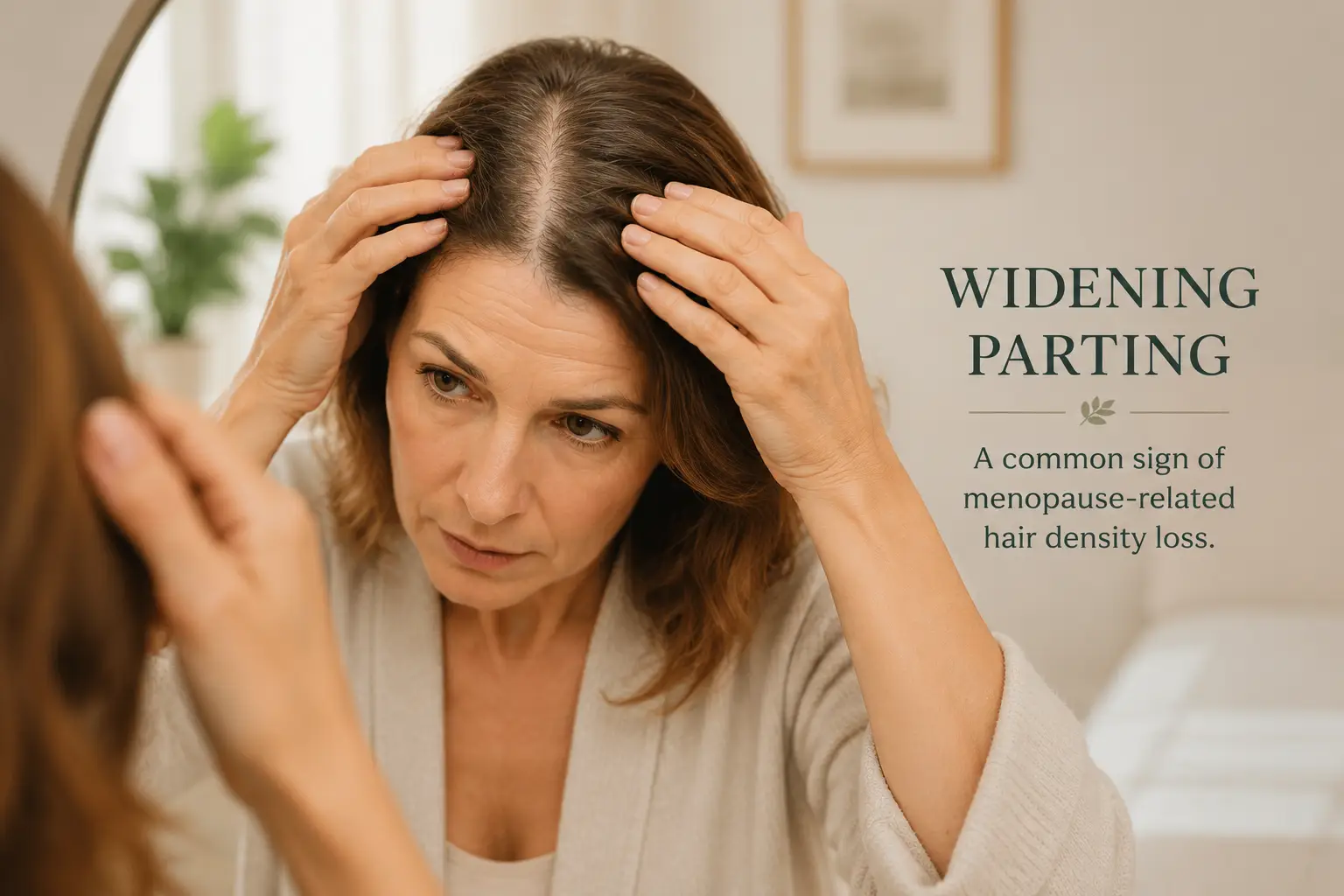
There’s a particular cruelty to the link between stress and hair loss. Significant stress can trigger shedding, and the shedding can become a major new source of distress. You may find yourself checking the plughole, monitoring every strand and dreading your reflection. That emotional loop is real even though worry alone cannot prove what is causing the hair loss.
I want to help you break the stress and hair loss loop. Not with empty “just relax” advice — if only it were that easy — but by understanding how the cycle works and tackling it from both ends at once.
How stress and hair loss are actually connected
Significant physical or emotional stress is a recognised trigger for telogen effluvium. The trigger disturbs the normal hair cycle so that more follicles than usual enter the resting phase; increased shedding often becomes noticeable around three months later. The British Association of Dermatologists explains the cycle, common triggers and expected recovery.
The key points are that the timing is delayed and that acute telogen effluvium usually improves after the trigger has resolved. Recovery is not instant, and not every episode of shedding is caused by stress, so seek an assessment if the pattern is persistent, severe, patchy or accompanied by scalp symptoms.
The stress and hair loss loop, named
Here’s the stress and hair loss trap laid out plainly, because seeing it clearly is the first step to escaping it:
- A significant stressor may disturb the hair cycle.
- Weeks later, you start shedding — seemingly out of nowhere.
- The shedding frightens you. You feel tense and start watching every strand.
- The distress can affect daily life, including sleep, concentration and mood.
- Repeated checking and searching can intensify worry, even though they cannot diagnose the cause or speed recovery.
Hair-related anxiety deserves attention in its own right. Reducing checking, getting reliable medical information and seeking support can improve wellbeing while the hair cycle recovers. These steps should not be presented as a direct treatment for shedding, and they do not replace evaluation for other causes.

6 practical ways to support your wellbeing
You cannot always remove life’s stressors, but these practical steps may help you manage stress and protect your wellbeing while you seek appropriate advice about the shedding:
- Protect your sleep. A regular sleep routine can support mood and coping. Treat it as wellbeing support rather than a promise to stop shedding.
- Move your body. Regular physical activity is one of the most reliable stress reducers we have. It doesn’t need to be intense; walking counts.
- Breathe on purpose. Slow, deliberate breathing and relaxation practices calm the nervous system in the moment. Even a few minutes helps.
- Consider mindfulness or meditation. Some people find structured relaxation useful for managing stress. If anxiety is persistent or impairing daily life, professional support may be more appropriate.
- Reach for support. Talking to people you trust, or a professional, lightens the load. Chronic stress and anxiety aren’t things you have to white-knuckle alone.
- Limit the searching. Repeated late-night reading about stress and hair loss can intensify anxiety without adding useful information. Try one trusted source, in daylight, rather than searching at midnight.
Breaking stress and hair loss at the other end: the hair anxiety
This is the part of the story many articles skip: protecting your wellbeing while the cause of the shedding is assessed and the hair cycle has time to recover.
Use reliable information. Acute telogen effluvium usually causes diffuse shedding rather than bald patches and often improves after the trigger resolves. That reassurance applies only when the diagnosis is correct; patchy, scarring, painful or persistent loss needs clinical assessment.
Stop the checking rituals. Constantly counting shed hairs, tugging to “test,” photographing your parting daily — these feel like control but they feed the anxiety and rarely change anything. Try to loosen the grip on the monitoring.
Get the pattern assessed when needed. A GP can consider your history, examine the scalp and decide whether tests for causes such as iron deficiency or thyroid disease are appropriate. Testing should be guided by your symptoms and clinical history rather than a universal panel.
Be kind to yourself. Feeling distressed about your hair isn’t vanity or weakness; hair is bound up with identity and confidence, and its loss is a real emotional event. Treat yourself with the compassion you’d offer a friend.

What happens in the hair cycle
It helps to understand the hair cycle without reducing a complex condition to a single hormone. Significant stress is a recognised trigger for telogen effluvium, but a person’s cortisol level does not by itself diagnose the condition or explain every case.
In telogen effluvium, more follicles than usual enter the resting phase. Those hairs remain in place for a time before shedding, which is why increased loss is commonly noticed around three months after the trigger rather than immediately.
Laboratory research explores how stress signalling may affect follicle biology, but those mechanisms should not be treated as proof of an individual cause or as evidence that relaxation techniques directly regrow hair.
In uncomplicated acute telogen effluvium, follicles are not scarred or destroyed, so regrowth is expected after the trigger resolves. A clinician should assess any pattern that does not fit that description.
How to tell stress shedding from something else
Stress shedding is diffuse. It comes from all over the head rather than from patches, and your hairline and parting stay in the same shape even as everything gets thinner.
It is also delayed. The gap between the trigger and the shedding is typically two to three months, which is exactly why people insist nothing stressful has happened recently. Cast your mind back a season rather than a week. This pattern is properly explained in the guide to telogen effluvium.
Acute telogen effluvium usually improves after the trigger resolves, although visible density takes longer to return. Seek medical advice if shedding continues beyond six months, appears in defined patches, or comes with soreness, redness, scaling or other symptoms.
Gradual patterned thinning without a distinct shedding episode can have other causes, including female-pattern hair loss, and may coexist with telogen effluvium. Our guide to menopause and hair thinning discusses midlife changes without treating menopause as the only possible diagnosis.
Sleep: the most underrated part
Sleep is worth protecting because it supports mental and physical wellbeing and can make stress easier to manage. It is not, however, a stand-alone treatment for hair loss, and improving sleep does not prove that stress was the cause.
Practical beats perfect here. Aim for a regular routine and morning daylight if that is realistic for you. If sleep problems are persistent, discuss them with a healthcare professional rather than treating sleep as a hair-regrowth protocol.
Keeping the phone out of the bedroom may reduce late-night reassurance-seeking. If you regularly wake in the night or struggle to return to sleep, use reliable sleep guidance or ask a clinician for advice rather than assuming there is one rule that suits everyone.
Be realistic: you do not need a flawless routine. Small, sustainable changes may support wellbeing, but their effect on an individual episode of shedding cannot be predicted.
Eating well without falling into restriction
Marked weight loss and restrictive diets can trigger telogen effluvium. Aim for a balanced diet that provides adequate energy and protein rather than following a hair-specific restrictive plan.
Iron deficiency is one possible cause of diffuse shedding. If you have heavy periods, dietary restriction or symptoms of anaemia, mention them to your clinician, who can decide whether blood tests are appropriate.
Avoid further restriction. Crash dieting and marked weight loss are recognised triggers for telogen effluvium, so maintaining adequate nutrition is sensible while the cause is investigated.
Do not take iron or other high-dose supplements on a guess. Unnecessary supplementation can cause harm, and excess selenium can contribute to hair loss. Use supplements when a clinician has identified a need or advised them for a restricted diet.
When to get professional help for the stress itself
If your mood is persistently low, if anxiety is interfering with work or sleep, or if you find yourself checking your hair many times a day, that is worth raising with your GP in its own right. You do not need to justify it by the hair.
Talking therapies, including cognitive behavioural therapy, can help with anxiety and unhelpful patterns of thought or behaviour. In England, some people can self-refer to NHS talking therapies; eligibility and routes vary, so check the NHS talking therapies page.
You do not need to reach a crisis before asking for help. If stress, anxiety or hair-related checking is affecting how you live, that is reason enough to seek support. Treating anxiety supports wellbeing; it should not be promised as a direct hair-loss treatment.
A 12-week plan for stress and hair loss
Twelve weeks can be a useful first review point, but recovery varies and visible density often takes many months to return. Use the plan as a way to organise care, not as a diagnostic or guaranteed regrowth timetable.
Weeks 1 to 2. If the shedding is marked or concerning, book a GP appointment and take a baseline photograph of your parting in consistent daylight. Your clinician can decide whether examination or blood tests are indicated. Avoid daily hair counts.
Weeks 3 to 6. Fix the sleep window and get morning light. Add movement you will actually repeat rather than the one you think you should do. Keep the hair routine gentle and unremarkable: no frantic product changes, no aggressive brushing, no daily tug tests.
Weeks 7 to 12. Follow any clinician-agreed plan and keep photographs no more than monthly. Short regrowing hairs may become visible, but their absence at this point does not by itself mean recovery has failed.
At the end of twelve weeks, compare photographs taken in similar conditions rather than relying on memory. If the shedding is unchanged, worsening or affecting your wellbeing, seek follow-up advice rather than adding unproven products.
If the shedding has not eased at all by then, that is your signal to go back to the GP rather than to buy something new. Persistent shedding beyond six months deserves investigation, and the earlier you raise it the less time you spend guessing. Significant stress is one recognised trigger, but it is not the only explanation, and a clinician can help assess the alternatives.
Three myths about stress and hair loss
“It happens straight away.” It does not. The delay between stress and hair loss is typically two to three months, and expecting an immediate link is why so many people conclude their shedding is unexplained.
“Every stress-related hair problem looks the same.” Telogen effluvium usually causes diffuse shedding, but stress does not rule out other conditions. Patchy loss, a changing hairline or scalp inflammation needs assessment.
“Just relax and it will stop.” Being told to relax can add guilt without addressing the problem. Practical wellbeing support may help you cope, while a clinician can decide whether examination or targeted tests are needed to look for treatable causes.
A gentle, grounding routine can help
A simple, gentle hair-care routine can give anxious energy somewhere neutral to go. Scalp massage may feel relaxing, but it has not been shown to treat telogen effluvium or speed regrowth. Keep the routine comfortable and avoid turning it into another inspection ritual.
Disclosure: Nunu Moor is our own cosmetic scalp-and-hair tonic, currently in development. It is intended for everyday cosmetic care, heat protection and light styling; it is not a treatment for stress-related shedding, telogen effluvium or any medical cause of hair loss, and it should not replace diagnosis or care from a qualified clinician.
If a simple cosmetic scalp-and-hair routine would suit you, you can join the Nunu Moor launch waitlist for early access and founder pricing. Joining does not imply that the product prevents shedding or promotes regrowth.
The link between significant stress and telogen effluvium is recognised, but it is not the only explanation for shedding. Address the trigger where possible, get reliable advice, care for your wellbeing and allow time for recovery. Acute telogen effluvium usually improves; persistent or atypical loss needs reassessment.
If stress or anxiety is affecting your wellbeing beyond your hair, please consider talking to your GP or a mental health professional — support is available, and you don’t have to manage it alone.
FAQ:
Can stress really cause hair loss?
Yes. Significant physical or emotional stress is a recognised trigger for telogen effluvium, which usually becomes noticeable around three months later. Not all shedding is stress-related, so the pattern still matters.
How do I break the stress and hair loss cycle?
Tackle both ends: manage stress through sleep, movement, breathing and support, and calm the hair-specific anxiety with facts, less obsessive checking, and self-compassion.
Does anxiety about hair loss make it worse?
Hair loss can increase anxiety and checking behaviours. Managing that distress can improve wellbeing, but it should not be described as a proven way to stop shedding.
Is stress-related hair loss permanent?
Acute telogen effluvium is usually temporary, with regrowth expected after the trigger resolves. A different or persistent pattern may have another cause and should be assessed.
What actually reduces stress that affects hair?
Protecting sleep, regular movement, slow breathing and support may help you manage stress. They support wellbeing but do not replace assessment or treatment of an underlying medical cause.
Related reading on stress and hair loss
- Telogen effluvium: why you’re shedding and when it stops
- The one-minute scalp ritual: no grease, no extra wash
- Menopause hair thinning: the oestrogen drop explained
Sources and further reading: British Association of Dermatologists — telogen effluvium, NHS — Hair loss and NHS — mental health support. This article is general information, not medical advice.