
QUICK ANSWER
Seaweed extracts can be useful cosmetic ingredients for scalp care because some provide film-forming, humectant, emollient or antioxidant compounds. That may help a well-formulated product condition dry or uncomfortable skin. However, the presence of minerals in seaweed does not mean those minerals are absorbed through the scalp in nutritionally meaningful amounts, and there is not good clinical evidence that a topical seaweed product treats hair loss or stimulates hair growth.
KEY TAKEAWAYS
- Different seaweed species contain different polysaccharides, pigments, minerals and other compounds; “seaweed” is not one standardised ingredient.
- The most defensible cosmetic claims are conditioning, hydration support and improved feel, depending on the extract and complete formula.
- Topical seaweed does not correct iron, zinc, iodine or other dietary deficiencies.
- Seaweed scalp products are cosmetics, not treatments for hair loss.
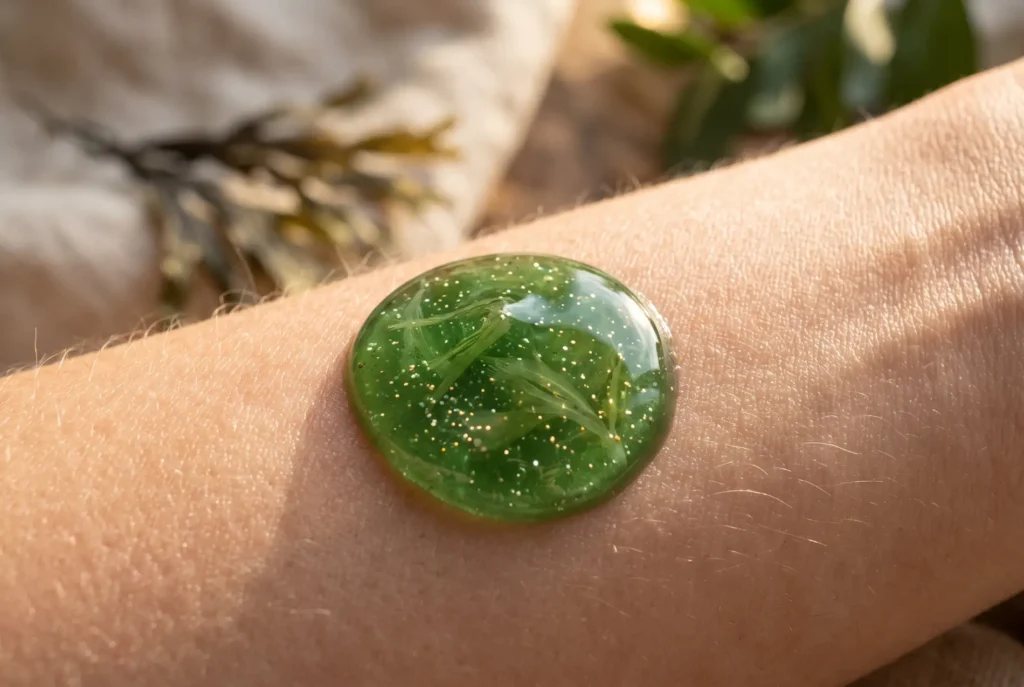
Seaweed for scalp health appears on ingredient lists under names such as Fucus vesiculosus, Laminaria, Ascophyllum nodosum, Chondrus crispus and Ulva. “Marine complex” may sound impressive, but the named ingredient and the complete formula tell you more than the marketing phrase.
Why minerals matter — and where the original claim goes too far
Hair follicles are active structures, and adequate nutrition matters to normal follicle function. Iron and zinc deficiency can be relevant in some people with hair loss, but the evidence varies by nutrient, type of hair loss and individual. A clinical review of vitamins and minerals in hair loss describes the evidence as incomplete and cautions against assuming that supplementation helps when no deficiency is present. See the peer-reviewed review in Dermatology and Therapy.
That systemic nutrition evidence cannot be transferred to a cosmetic scalp product. A seaweed extract may contain iron, zinc, magnesium, iodine or selenium, but content is not the same as delivery: the amount in the finished formula, chemical form, skin penetration and contact time all matter. There is no established evidence that applying seaweed to the scalp corrects a blood deficiency or feeds the follicle with those minerals in a clinically meaningful way.
What seaweed extracts may do in scalp care
Seaweed-derived polysaccharides and other compounds are used in cosmetics as humectants, film formers, emollients and skin-conditioning agents. Laboratory and early cosmetic research also reports antioxidant and soothing potential for particular extracts. A broad review of seaweed compounds in cosmetics summarises these uses.
The important limitation is that much of this research is ingredient-specific, laboratory-based or focused on facial skin rather than the scalp. It supports cautious claims about cosmetic conditioning; it does not establish that every seaweed extract calms irritation, repairs the scalp barrier or grows hair. The finished formula matters more than the romance of a single ingredient.

Topical care versus dietary deficiency
Applying seaweed to your scalp is not the same as correcting a nutritional deficiency. If iron deficiency, thyroid disease or another medical issue is contributing to shedding, a topical cosmetic will not address the cause. Testing and treatment should be guided by a qualified clinician rather than by a blanket supplement recommendation.
Think of a seaweed scalp product as optional skin care: it may help the scalp feel softer, less dry or more comfortable if the whole formula suits you. Those are worthwhile cosmetic outcomes, but they are different from changing hair density or the hair-growth cycle.
How to choose and use a seaweed scalp product

- Read the full ingredients list. Look for a named algae or seaweed extract rather than relying on “marine” language alone.
- Choose the format for your goal. A leave-on product provides longer skin contact than a rinse-off shampoo, but longer contact does not prove better hair-growth results.
- Favour a comfortable formula. Fragrance, essential oils, alcohol level and other ingredients may matter more to a reactive scalp than the seaweed itself.
- Patch test first. Stop if the product causes burning, persistent redness, swelling or worsening itch.
- Apply it to the scalp if it is a scalp product. Part the hair, use the amount on the label and distribute gently. The one-minute scalp ritual offers a simple application method.
“Feed the soil” — useful metaphor, not physiology
It is tempting to describe the scalp as soil and seaweed as fertiliser. Keep the metaphor in its lane. A well-tolerated cosmetic can support comfort and reduce dryness, but skin does not absorb a topical mineral blend as roots absorb nutrients from soil. Seaweed cannot override genetic, hormonal, autoimmune, thyroid-related or nutritional causes of hair loss.
Five minerals often mentioned in the seaweed story
These nutrients have recognised roles in the body, but that does not demonstrate a benefit from putting them on the scalp:
- Iodine. The body needs iodine to make thyroid hormones. Seaweed can contain substantial and highly variable amounts when eaten, especially brown seaweeds. That is an oral-intake issue, not a reason to expect a topical hair benefit.
- Iron. Iron deficiency can be associated with shedding in some people, and confirmed deficiency should be assessed and treated medically. A topical seaweed extract is not a substitute.
- Zinc. Zinc is involved in many cellular processes, but evidence linking zinc levels, supplementation and different forms of hair loss is inconsistent. More is not automatically better.
- Selenium. Selenium is an essential nutrient, but excess intake can itself cause hair loss. Do not use the presence of selenium in seaweed as a reason to self-supplement.
- Magnesium. Magnesium has broad roles in the body, but there is no good clinical basis for claiming that magnesium from topical seaweed improves hair growth.
The safest summary is simple: a mineral may be essential in human nutrition without being an effective topical hair-growth ingredient.
Which seaweeds are used in cosmetics?
Brown algae such as bladderwrack (Fucus vesiculosus), kelp and Laminaria species commonly appear as extracts. Red algae such as Chondrus crispus (Irish moss) can contribute film-forming or water-binding polysaccharides. Green algae such as Ulva also appear in cosmetic extracts.
Species, harvest location, extraction method and formulation can change an extract’s composition. You cannot infer the amount or performance of a compound from the seaweed’s name alone, and a low position on an ingredients list is not proof that an ingredient is useless: effective use levels differ.
Iodine, thyroid health and oral seaweed products
Iodine warnings mainly concern eating seaweed or taking kelp supplements. Seaweed iodine content varies widely by species and source, and excessive iodine intake can disrupt thyroid function. The clinical review “Iodine, Seaweed, and the Thyroid” explains why regular intake of iodine-rich seaweeds deserves caution.
If you have a thyroid condition, are pregnant, take thyroid medication or are considering a concentrated kelp supplement, ask a clinician or pharmacist for individual advice. Do not swallow a cosmetic scalp product. Manufacturers should also source and test marine ingredients appropriately because seaweeds can accumulate environmental contaminants.
What seaweed for scalp health cannot claim
- It cannot correct low ferritin, zinc deficiency or thyroid dysfunction through topical use.
- It has not been shown to override hormonal or genetic hair thinning.
- It should not be presented as regrowing hair or treating alopecia without appropriate clinical evidence and regulatory authorisation.
If you are worried about persistent, sudden, patchy or otherwise unexplained hair loss, see a GP before spending heavily on cosmetics or supplements. The NHS hair-loss guidance advises getting a clear idea of the cause before considering a commercial hair clinic.
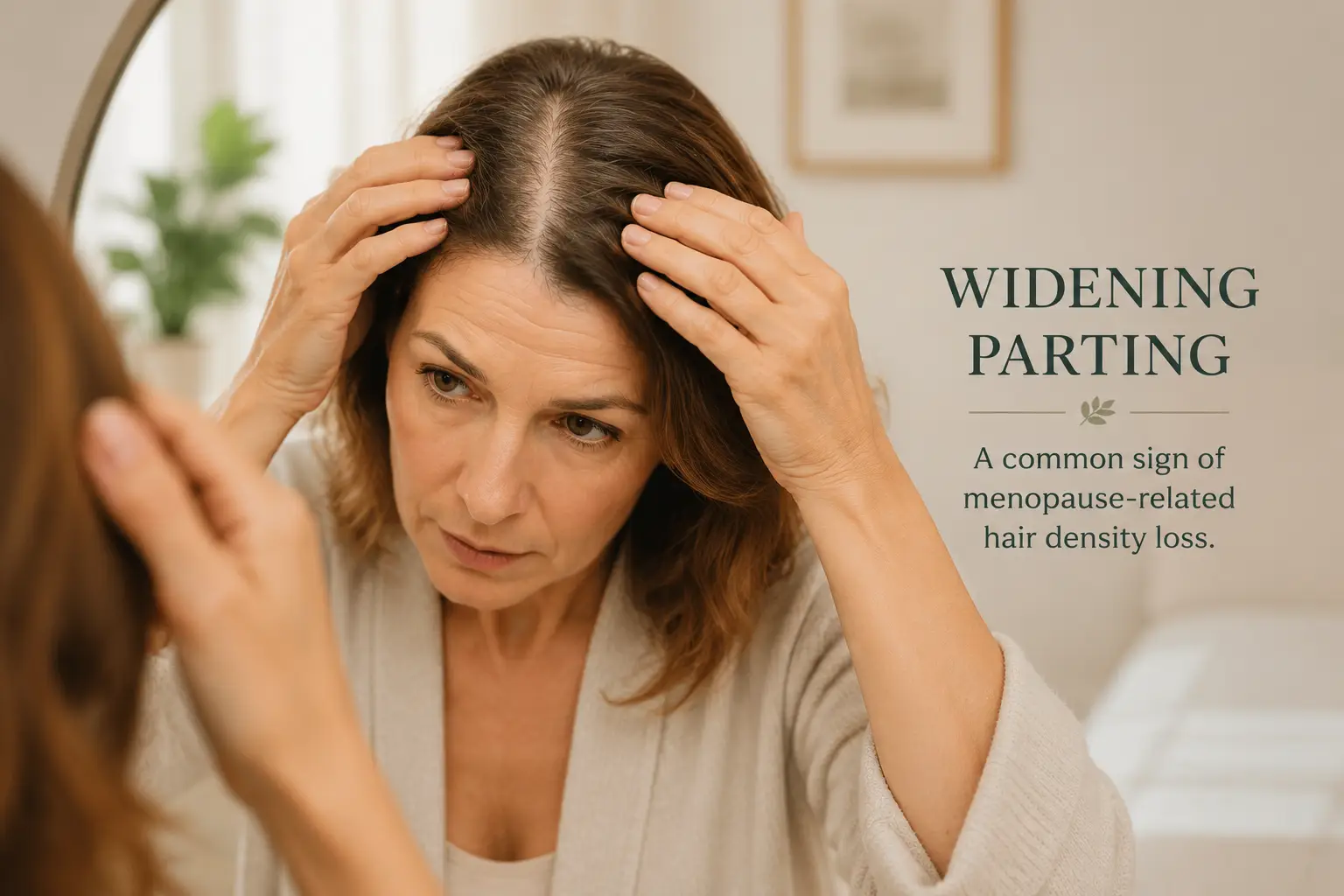
For hormonal context, read our guide to menopause and hair thinning.
How to judge a cosmetic result
Judge a seaweed scalp product by the claim it can reasonably make. Does the scalp feel less dry or tight? Is the formula pleasant, non-stinging and easy to use consistently? Those observations can help you decide whether the product suits your routine.
Do not interpret a tingling sensation as proof of circulation or growth, and do not wait for a cosmetic to manage continuing hair loss. Stop use if irritation develops and seek medical advice for ongoing shedding, scalp pain, sores or marked inflammation.
Common mistakes with seaweed scalp care
- Equating mineral content with absorption. A nutrient’s presence in the raw material does not prove meaningful delivery through skin.
- Expecting a hair-loss treatment. Cosmetic conditioning and medical treatment are different categories.
- Starting several products at once. Introduce one at a time so you can identify benefits or irritation.
- Ignoring the rest of the formula. A seaweed extract does not cancel out ingredients your scalp cannot tolerate.
- Self-prescribing seaweed supplements. Oral kelp can deliver unpredictable iodine and is not a casual route to better hair.
Is seaweed for scalp health worth it?
It can be, if you want a well-formulated cosmetic that leaves your scalp feeling conditioned and comfortable. Seaweed-derived compounds can make useful contributions to texture, hydration and skin feel. The evidence is much weaker for broad promises about mineral delivery, follicle nourishment or hair growth.
Buy the formula, not the folklore. A good seaweed scalp product should be sold on realistic cosmetic benefits, not on fear of deficiency or promises to regrow hair.
A disclosed cosmetic option
Disclosure: Nunu Moor Scalp & Hair Tonic is our own commercial cosmetic product in development, so this is not an independent recommendation. It is intended for everyday scalp and hair care, heat protection and light styling—not to correct deficiencies or treat hair loss.
If that cosmetic approach suits your needs, you can join the Nunu Moor launch waitlist for early access and founder pricing. This commercial call to action is separate from the evidence discussed above; evidence about an individual seaweed compound does not establish benefits for a finished product.
FAQ
Is seaweed good for hair?
Seaweed extracts can be useful in products that condition the scalp or hair fibre. There is not good clinical evidence that topical seaweed, by itself, treats hair loss or increases growth.
Does the scalp absorb minerals from seaweed?
Do not assume so. Detectable minerals in an extract do not establish nutritionally meaningful absorption through the scalp, and topical seaweed cannot correct a systemic deficiency.
Can seaweed fix iron deficiency?
No topical seaweed product can reliably correct iron deficiency. See a clinician for appropriate testing and treatment.
Is a leave-on seaweed serum better than shampoo?
A leave-on gives longer contact and may be better suited to cosmetic conditioning, while shampoo is designed mainly to cleanse. Neither format should be assumed to grow hair.
Should I take a kelp supplement for my hair?
Not without individual advice. Kelp supplements can contain variable amounts of iodine, and excess iodine can affect thyroid function.
Related reading
- Ginkgo biloba for hair: does scalp circulation help?
- The one-minute scalp ritual: no grease, no extra wash
- Greasy scalp after washing? Why your serum may be the cause
Evidence reviewed: seaweed compounds in cosmetics; vitamins, minerals and hair loss; iodine, seaweed and thyroid health; NHS hair-loss guidance. This article provides general information, not medical advice.