Quick Answer: Scalp serum ingredients are listed on the label in descending order of concentration, so what appears near the top makes up most of the product. To judge a serum, check where the headline actives sit, whether the base is lightweight, whether fragrance is high up, and whether claims are backed by named evidence rather than vague promises.
Key Takeaways:
- Ingredients are listed from highest to lowest concentration.
- An active listed after the fragrance is likely present in a small amount.
- Water-light bases suit the scalp better than heavy silicone films.
- Fragrance and some essential oils can irritate sensitive scalps.
- “Clinically proven” means little unless you know what was tested.
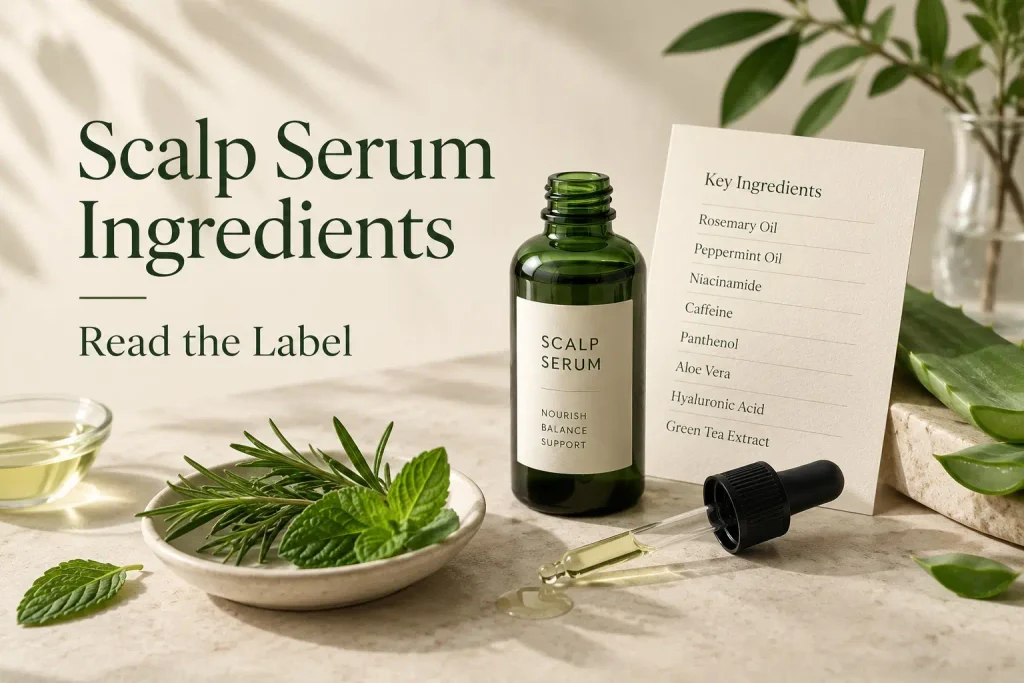
Scalp serum ingredients are printed on every bottle, yet most of us read the front of the pack and ignore the back — which is exactly where the truth is. Learning to read a label takes ten minutes and saves a great deal of money on products that promise far more than their formulas can deliver. Here are seven tips.
1. Order Tells You Almost Everything
Ingredients are listed using standardised INCI names, from highest concentration to lowest. Water usually comes first. Whatever sits in the top five makes up the bulk of the product.
Below around 1% concentration, ingredients can be listed in any order — so the tail end of the list tells you less.
2. Find the Headline Active
Locate the ingredient the front of the pack is shouting about. If it’s buried beneath the fragrance (“parfum”), which is usually a small fraction of a formula, the active is likely present in a very small amount.
That doesn’t make the product useless, but it tells you how much weight the marketing is putting on very little.
3. Check the Base Before the Actives
The base decides how a serum feels and behaves. For the scalp you generally want water-light textures that absorb, not heavy film-formers that sit on top and build up.
Heavier silicones such as dimethicone can add slip and shine on lengths, but at the roots they contribute to the residue I describe in scalp buildup and flatten fine hair.
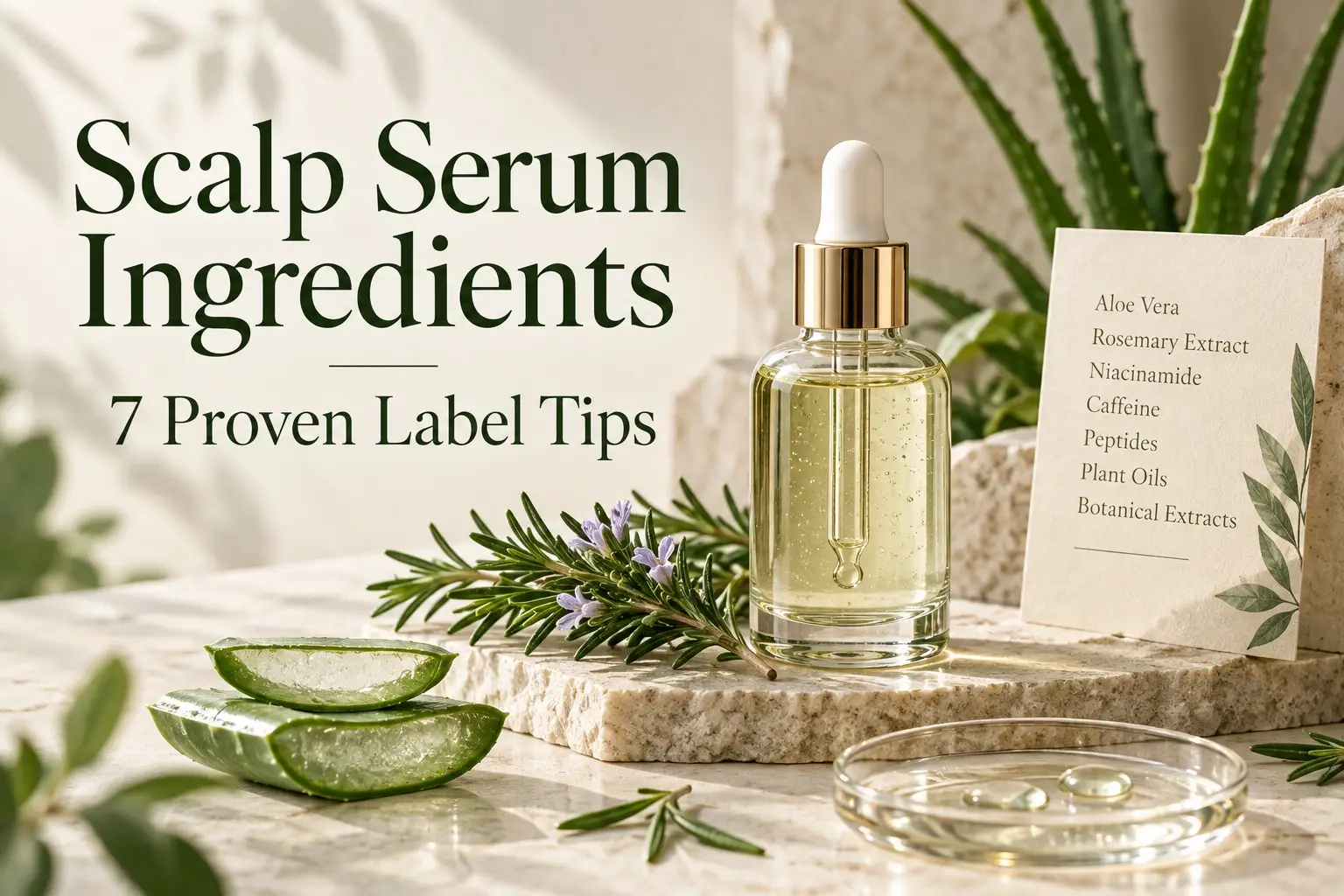
4. Scalp Serum Ingredients That Earn Their Place
Some ingredients have a genuine rationale, graded honestly:
- Rosemary — the strongest human evidence among common botanicals; see rosemary oil for hair
- Caffeine — promising lab evidence, best in leave-on formats; see caffeine for hair
- Soothing botanicals such as liquorice and aloe for irritated scalps
- Humectants such as glycerin, which hydrate without heaviness
Proprietary complexes like Redensyl or Procapil appear on many labels. Their data is largely manufacturer-led, so treat them as interesting rather than proven.
5. Watch the Fragrance and Essential Oils
Fragrance and certain essential oils are among the more common causes of skin sensitisation. If your scalp is reactive, look for fragrance-free options or products where fragrance sits very low on the list.
The British Association of Dermatologists publishes patient information on contact allergies, and the NHS contact dermatitis guidance explains the symptoms. Always patch test.
6. Decode the Claims
“Clinically proven” and “dermatologist tested” sound impressive but can mean very little. Ask: proven to do what, in how many people, for how long, and was it this product or one ingredient in a lab?
A product that says “supports a healthy scalp” is often being more honest than one promising regrowth.
7. Match the Serum to Your Scalp
The best formula for an oily scalp isn’t the best for a dry, sensitive one. Identify your scalp type first using the skinification of hair, then choose accordingly.
And remember no serum replaces a medical assessment for significant hair loss — rule out treatable causes with your GP first.
A Quick Label Checklist
- Is the headline active above the fragrance?
- Is the base lightweight and water-based?
- Is fragrance low or absent if you’re sensitive?
- Are claims specific and modest?
- Does it suit your scalp type?
The Kartee Standard
Nunu Moor is our commercial botanical scalp-and-hair care brand. Join the Nunu Moor launch waitlist for launch updates, early access and founder pricing. The tonic is a cosmetic product, not a treatment for hair loss.
Once you can read scalp serum ingredients, marketing loses most of its power over you. The label was always the more honest half of the bottle.
FAQ:
- How do I read scalp serum ingredients? Ingredients are listed from highest to lowest concentration. Check where the headline active sits, what the base is, and how high fragrance appears.
- What ingredients should a scalp serum have? It depends on your scalp, but a lightweight base with actives that have a genuine rationale, such as rosemary, caffeine or soothing botanicals, is a sensible starting point.
- What should I avoid in a scalp serum? Heavy film-forming bases at the roots, and high fragrance or essential oils if your scalp is sensitive.
- Does clinically proven mean a product works? Not necessarily. It depends on what was tested, on whom, for how long, and whether it was the full product or one ingredient.
- Are Redensyl and Procapil proven? They are proprietary complexes with largely manufacturer-led data, so they’re interesting but not independently proven to the same standard as licensed treatments.