Quick Answer The scalp microbiome is the community of bacteria and fungi living on your scalp skin. When it’s balanced, the scalp is calm and comfortable; when it’s disrupted — often by over-washing, harsh products or excess oil — you can get flaking, itching and irritation. Restoring balance means gentler cleansing, not harsher.
Key Takeaways:
- Your scalp hosts a living microbial community, like your gut.
- Balance matters more than sterility — over-washing disrupts it.
- Disruption shows up as flaking, itch, oiliness or sensitivity.
- Malassezia yeast is normal; overgrowth is the problem.
- Gentle, consistent care restores balance better than aggressive treatment.
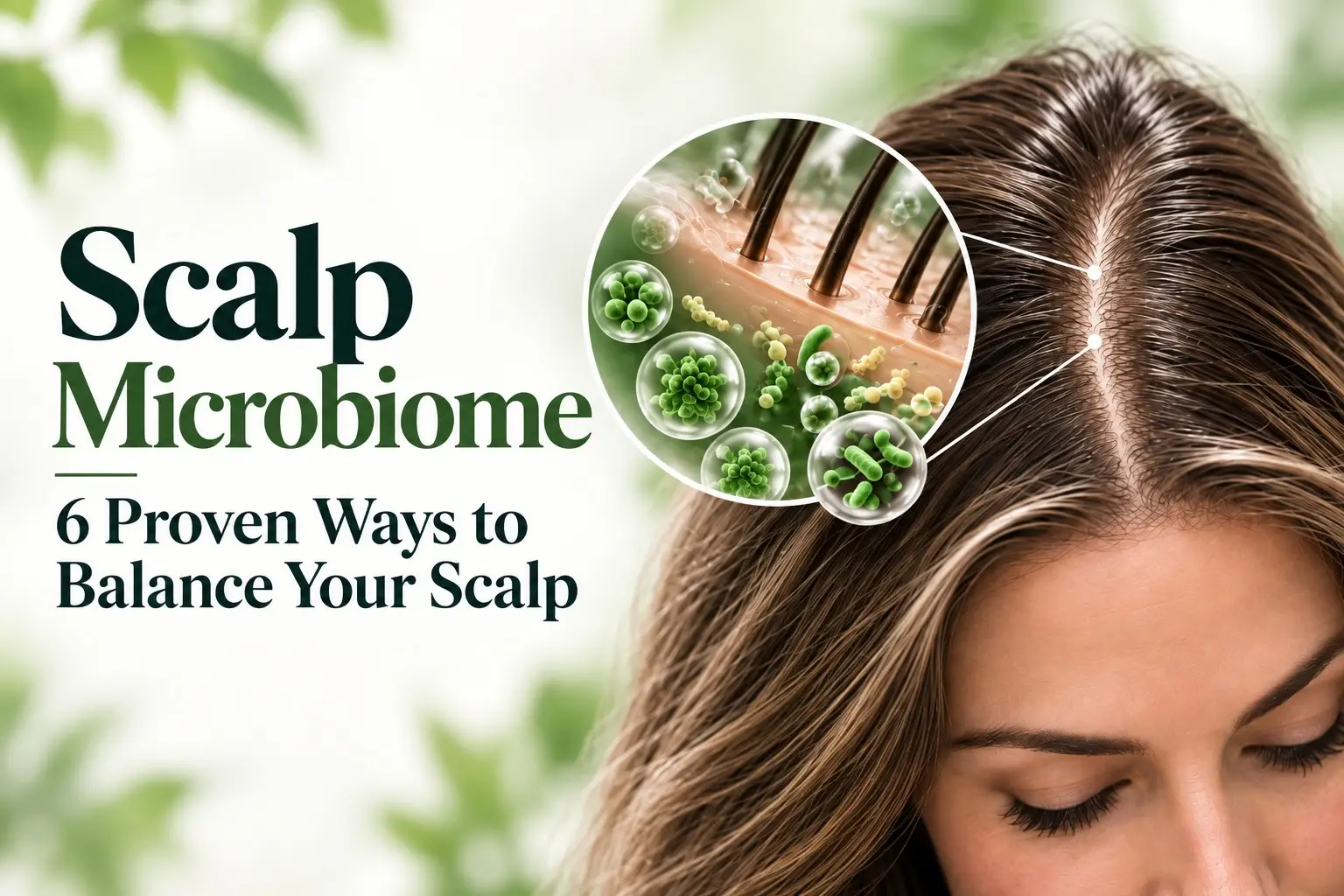
Scalp microbiome is a phrase that’s crept into hair care in the last few years, and unlike most buzzwords, it describes something genuinely useful. Your scalp isn’t a sterile surface — it’s a living ecosystem, home to a community of bacteria and fungi that, when balanced, keeps everything calm and comfortable. When that balance tips, you get the flaking, itching and oiliness that send people to the pharmacy aisle. Here are six ways to restore it.
1. Understand What’s Actually Living Up There
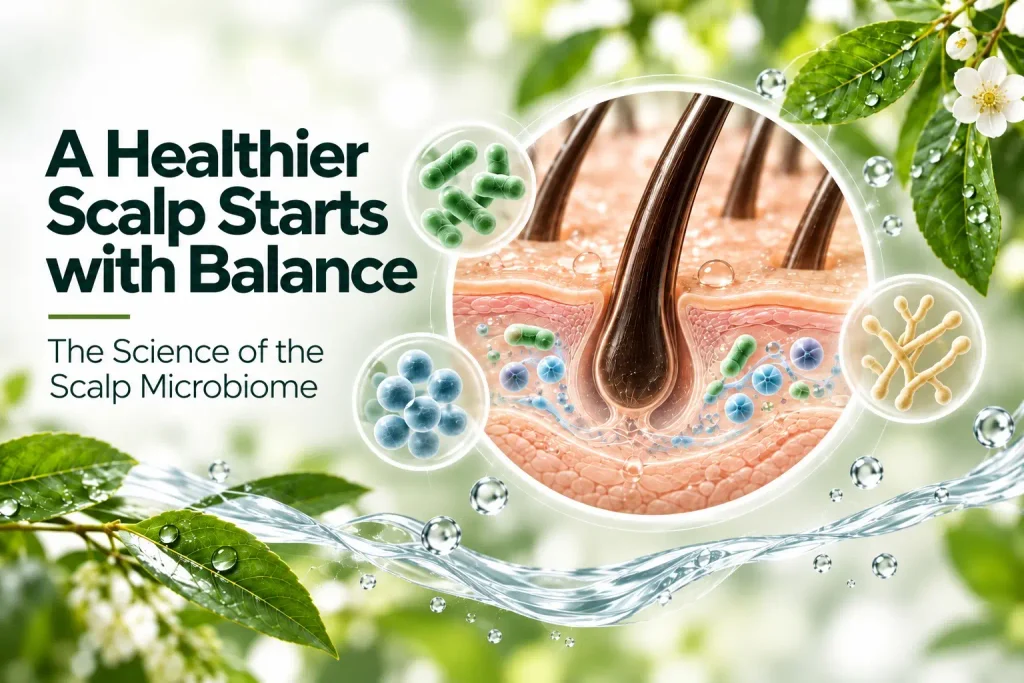
Your scalp hosts microorganisms much as your gut does. Two groups dominate: Cutibacterium and Staphylococcus bacteria, and Malassezia yeasts. All are normal residents. The scalp is oilier than most skin, which makes it a particularly rich habitat.
The goal was never to eliminate them. A healthy scalp microbiome is about proportion — the right residents in the right balance.
2. Recognise When It’s Out of Balance
Disruption tends to show up in familiar ways: flaking or dandruff, itching, redness, a scalp that feels oily faster than it should, or new sensitivity to products that never bothered you.
Malassezia overgrowth in particular is associated with dandruff and seborrhoeic dermatitis. The NHS guidance on dandruff explains when it’s a simple wash-routine issue and when it needs treatment.
3. Stop Over-Washing — It Backfires
This is the counterintuitive one. Washing more aggressively to “clean away” the problem strips the scalp’s natural oils and disrupts the microbial balance further, which can trigger rebound oil production.
It’s the same loop I describe in solving the greasy scalp dilemma: harsh cleansing creates the very condition you’re trying to fix. Gentler and less frequent usually beats stronger and daily.
4. Clear Buildup Without Stripping
Balance isn’t helped by product buildup either — heavy silicones, waxes and residue create a film that alters the scalp environment. A periodic gentle clarifying wash removes buildup without scouring.
The distinction matters: clarify occasionally, cleanse gently the rest of the time.
5. Soothe Inflammation, Don’t Just Attack Microbes
An inflamed scalp is a disrupted scalp. Calming botanicals — liquorice being the classic, as covered in the case for a calm scalp — help settle irritation so the environment can recover.
Nourishment helps too. Mineral-rich botanicals like those in the seaweed guide support scalp skin without heavy buildup.
6. Know When It’s Medical
Persistent flaking, intense itching, soreness, or scaly, inflamed patches deserve a proper look — this could be seborrhoeic dermatitis or psoriasis, which are treatable but won’t resolve with routine tweaks alone.
The British Association of Dermatologists has patient information on scalp conditions. Soothing the surface while ignoring an underlying condition is the mistake to avoid.
Why This Matters for Hair
A disrupted, inflamed scalp is a poorer environment for follicles to work in. You can’t grow strong hair from irritated ground — which is why microbiome-friendly care sits underneath everything else on this blog.
Nunu Moor is our commercial botanical scalp-and-hair care brand. Join the Nunu Moor launch waitlist for launch updates, early access and founder pricing. The tonic is a cosmetic product, not a treatment for hair loss.
Look after the ecosystem, and the scalp looks after your hair.
FAQ:
- What is the scalp microbiome? It’s the community of bacteria and fungi living on your scalp skin, including Cutibacterium, Staphylococcus and Malassezia yeasts. Balance among them keeps the scalp calm.
- What disrupts scalp microbiome balance? Over-washing, harsh or stripping products, heavy product buildup, excess oil and inflammation can all tip the balance.
- Does dandruff mean my scalp microbiome is unbalanced? Often yes. Malassezia overgrowth is associated with dandruff and seborrhoeic dermatitis, though persistent cases need medical assessment.
- How do I restore scalp microbiome balance? Wash gently and less often, clarify buildup periodically, soothe inflammation, and avoid harsh stripping products.
- Can washing less help my scalp? Frequently yes. Over-washing strips natural oils and can trigger rebound oil production, worsening the imbalance.