
QUICK ANSWER
Menopause can affect hair density, diameter and texture, but HRT is not a hair-loss treatment and should not be started for hair symptoms alone. Research supports a biological link between changing hormones and the hair follicle, yet direct evidence that HRT reliably regrows scalp hair is limited. If your hair is thinning, the safest approach is to identify the type and cause of hair loss, discuss menopause symptoms and HRT benefits and risks with a qualified clinician, and use a hair-specific treatment when appropriate.
Key Takeaways
- Menopausal hormonal change can affect the hair follicle, but age, genetics, illness, stress, nutrition, medication and scalp disease can also contribute.
- HRT is used for menopause-associated symptoms; expert reviews say it is not indicated for skin or hair symptoms alone.
- There is no good basis for promising that HRT will reverse thinning or for choosing an HRT formulation primarily for hair.
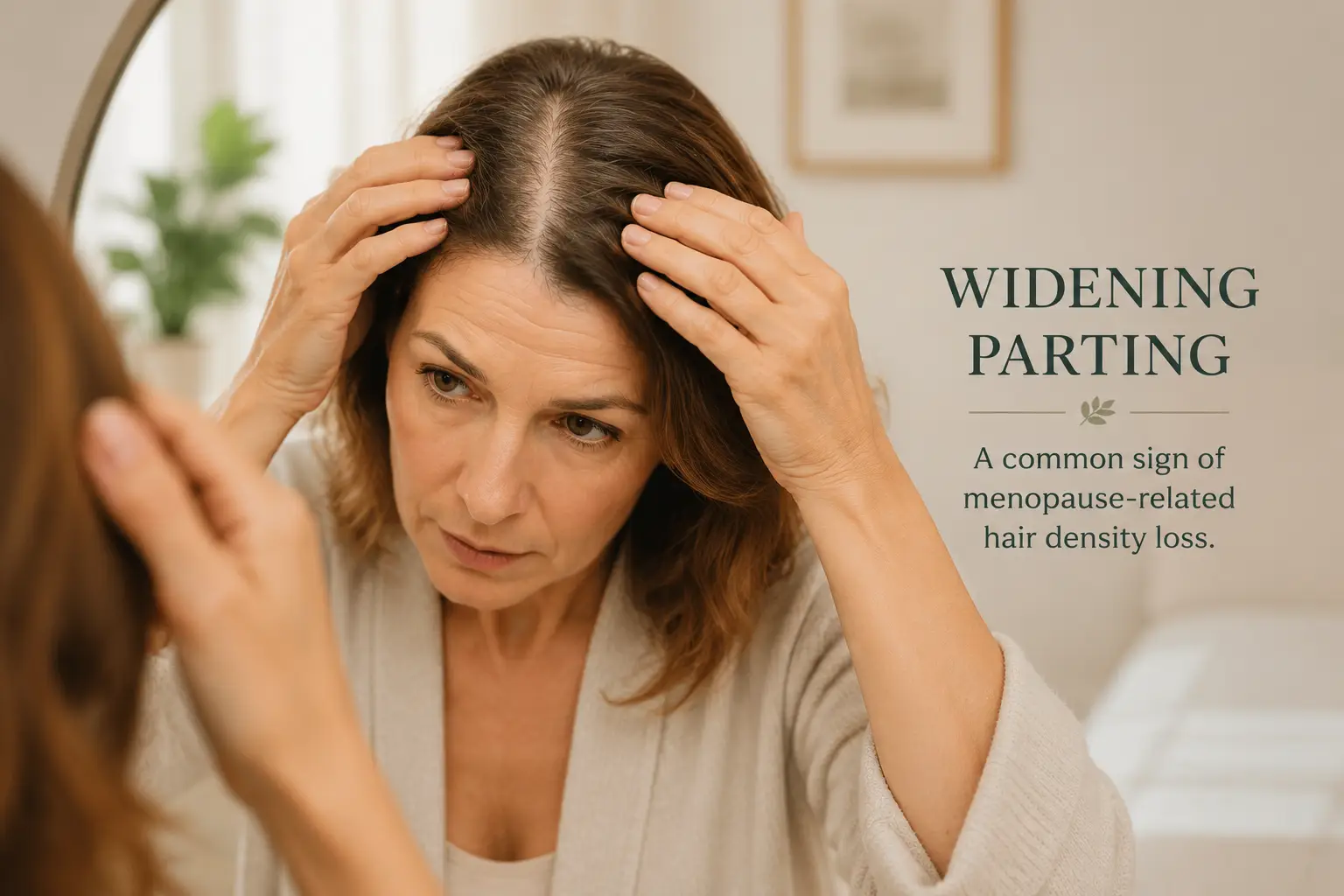
- A widening part, sudden shedding, smooth patches and a receding or inflamed hairline can represent different conditions and need different care.
- Scalp care can improve comfort and manageability, but it cannot replace diagnosis or medical treatment for a hair-loss disorder.
HRT and hair loss are often discussed together because many women first notice a wider part, a thinner ponytail or a change in texture during perimenopause. The timing makes the question understandable: if hormones are changing, could replacing them restore the hair?
The evidence is more cautious than many online claims suggest. Hormones matter to hair biology, but menopausal hair loss is not one diagnosis, and HRT has not been established as a dependable hair-regrowth treatment. These five facts will help you have a more useful conversation with your GP, menopause clinician or dermatologist.
1. Menopause Can Affect Hair, but It Is Not the Only Explanation
Hair follicles are sensitive to hormonal signals. A 2025 review of menopause and hair loss describes how the menopausal transition can be associated with reduced hair density and calibre, altered texture and changes in the hair cycle. The same review notes that female-pattern hair loss, telogen effluvium and frontal fibrosing alopecia are seen more often after menopause.
That does not mean every change after 45 is caused by low oestrogen. Ageing and genetic susceptibility overlap with menopause. A major illness, rapid weight loss, psychological stress, iron deficiency, thyroid disease, some medicines and inflammatory or scarring scalp conditions can also produce shedding or thinning.
The pattern gives useful clues. Gradual widening of the central part can fit female-pattern hair loss. Heavy shedding from all over the scalp a few months after illness, surgery, major stress or dietary change can fit telogen effluvium. Smooth bald patches suggest a different process. A receding frontal hairline with redness, scale, pain or loss of eyebrow hair can signal a scarring condition that deserves prompt specialist assessment.
If your main change is texture rather than obvious loss, see our guide to perimenopause hair changes. If shedding began after a stressful event, the guide to telogen effluvium explains the delay between a trigger and visible shedding.
2. HRT Is Not Recommended for Hair Symptoms Alone
HRT can be an effective treatment for menopause-associated symptoms, but hair loss is not a stand-alone reason to begin it. A peer-reviewed review in the journal Climacteric states that HRT is not indicated for skin and hair symptoms alone because treatment decisions must account for the overall balance of benefits and risks.
This distinction matters. It is biologically plausible that oestrogen replacement could influence an oestrogen-sensitive follicle, and some women report changes in hair after starting HRT. However, plausible biology and personal reports are not the same as strong clinical evidence that HRT reliably regrows hair. The available literature does not support a guaranteed result, a standard hair-response timeline or a claim that one routine HRT regimen is a proven hair treatment.
The NHS menopause-treatment guidance explains HRT in the context of menopausal symptoms and individual benefits and risks. Hair can be mentioned during that conversation, but it should not replace the broader assessment.

3. HRT Type and Route Are Whole-Health Decisions
HRT is not one product. Depending on a person’s circumstances, treatment may involve oestrogen-only or combined HRT, different routes such as a patch, gel, spray or tablet, and either sequential or continuous regimens. People with a uterus are generally offered combined HRT to protect the endometrium, while oestrogen-only HRT is generally offered after a total hysterectomy.
NICE menopause guidance says discussions should cover combined versus oestrogen-only HRT, oral versus transdermal routes, the types of oestrogen and progestogen, regimen, dose and duration. The information should be tailored to age, circumstances and personal risk factors.
Those choices should therefore be based on your menopause symptoms, whether you have a uterus, medical history, preferences and clinical risk assessment—not on an online list of supposedly “hair-friendly” hormones. Do not change, add or stop prescribed hormones because of a blog post. If shedding begins or worsens after a medication change, record the timing and discuss it with the prescriber rather than experimenting alone.
4. Diagnosis Comes Before Treatment
A useful appointment starts with the pattern and timeline: when the change began, whether shedding or gradual thinning is dominant, recent illness or weight change, menstrual and menopause symptoms, family history, medicines and supplements, and any itching, pain, redness or scale. Photographs taken in the same light and from the same angle can make gradual change easier to judge.
Blood tests are not automatically required for every person with thinning hair. NICE guidance on female-pattern hair loss says thyroid function, a full blood count, ferritin and vitamin D may be considered when telogen effluvium is suspected, the presentation is atypical, or there are signs of anaemia or hypothyroidism. Testing should follow the clinical picture rather than a universal supplement checklist.
This is important because taking iron or other high-dose supplements without a demonstrated need is not a harmless shortcut. The right next step may be treating a deficiency, reviewing a medicine, addressing an inflammatory scalp problem, managing female-pattern hair loss, or simply monitoring a temporary shed. HRT cannot correct every one of those causes.
Seek medical advice promptly if hair loss is sudden, patchy, painful or accompanied by scalp inflammation, eyebrow loss, menstrual changes outside the expected transition, new facial hair or other symptoms of androgen excess. Early assessment matters particularly when scarring hair loss is possible because permanent follicle damage can occur.
5. Hair-Specific Care May Still Be Needed
If female-pattern hair loss is diagnosed, a clinician may discuss a treatment directed at that condition rather than relying on HRT. The NHS hair-loss guidance notes that minoxidil can be used for female-pattern baldness, while also explaining that no treatment is completely effective and benefits only continue while treatment is used. A GP or dermatologist can help determine whether it is appropriate for you.
For telogen effluvium, identifying and correcting the trigger is usually more relevant than choosing a growth product. For an inflamed or scarring scalp condition, treatment is different again. This is why “Does HRT help hair loss?” is less useful than “What type of hair loss do I have, and what treatment fits that diagnosis?”
Gentle daily care still has a role. Avoid tight styles and repeated high heat when the fibre is fragile, handle wet hair carefully, and use products that do not leave your scalp persistently irritated. A comfortable scalp and reduced breakage can improve how the hair looks and feels, but scalp cosmetics should not be presented as regrowing follicles or treating a medical condition.
What to Ask at Your Appointment
- Does this look like female-pattern hair loss, telogen effluvium, breakage or a scalp disorder?
- Do my symptoms or examination suggest that blood tests are appropriate?
- If I am considering HRT, what are its likely benefits and risks for my menopause symptoms overall?
- Could a current medicine or a recent treatment change be contributing?
- Would a hair-specific treatment or dermatology referral be appropriate?
- What change should prompt an earlier review?
The Nunu Moor Approach
Disclosure: Nunu Moor Scalp & Hair Tonic is our own product in development. It is a cosmetic product designed for everyday scalp care, heat protection and light styling; it is not HRT and is not a treatment for menopause-related hair loss.
If you want a shorter daily routine while you seek the right explanation for thinning or shedding, join the Nunu Moor launch waitlist for early access and founder pricing.
HRT and hair loss deserve a careful, evidence-led conversation. Menopause can influence hair, but HRT is not a guaranteed regrowth strategy. Make the HRT decision for your health and menopause symptoms as a whole, then address hair loss according to its actual pattern and cause.
This article provides general information, not individual medical advice. Speak with a qualified healthcare professional before starting, stopping or changing HRT or hair-loss treatment.
FAQ
Does HRT stop menopausal hair loss?
Not reliably. Hormonal change can affect the hair follicle, but direct evidence that HRT consistently stops or reverses hair loss is limited. The result also depends on the actual cause of the thinning.
Should I start HRT just for thinning hair?
No. Expert review evidence says HRT is not indicated for skin and hair symptoms alone. Discuss HRT in relation to your menopause symptoms, health history, preferences and overall balance of benefits and risks.
Can HRT make hair shedding worse?
Hair can change for many reasons, including illness, stress, nutrition, medication and an underlying hair-loss condition. If shedding starts or clearly worsens after beginning or changing HRT, document the timing and speak with the prescriber. Do not stop prescribed treatment without medical advice.
How long should I wait to judge a hair change?
Hair cycles are slow, so visible density does not change overnight. There is no established HRT-for-hair timeline because HRT is not a hair-loss treatment. A clinician can suggest a review period based on your diagnosis and any treatment chosen specifically for it.
What tests should I request for menopausal hair loss?
There is no universal panel for everyone. Depending on your symptoms and the pattern of loss, a clinician may consider a full blood count, ferritin, thyroid function or vitamin D, and may investigate androgen excess when relevant.