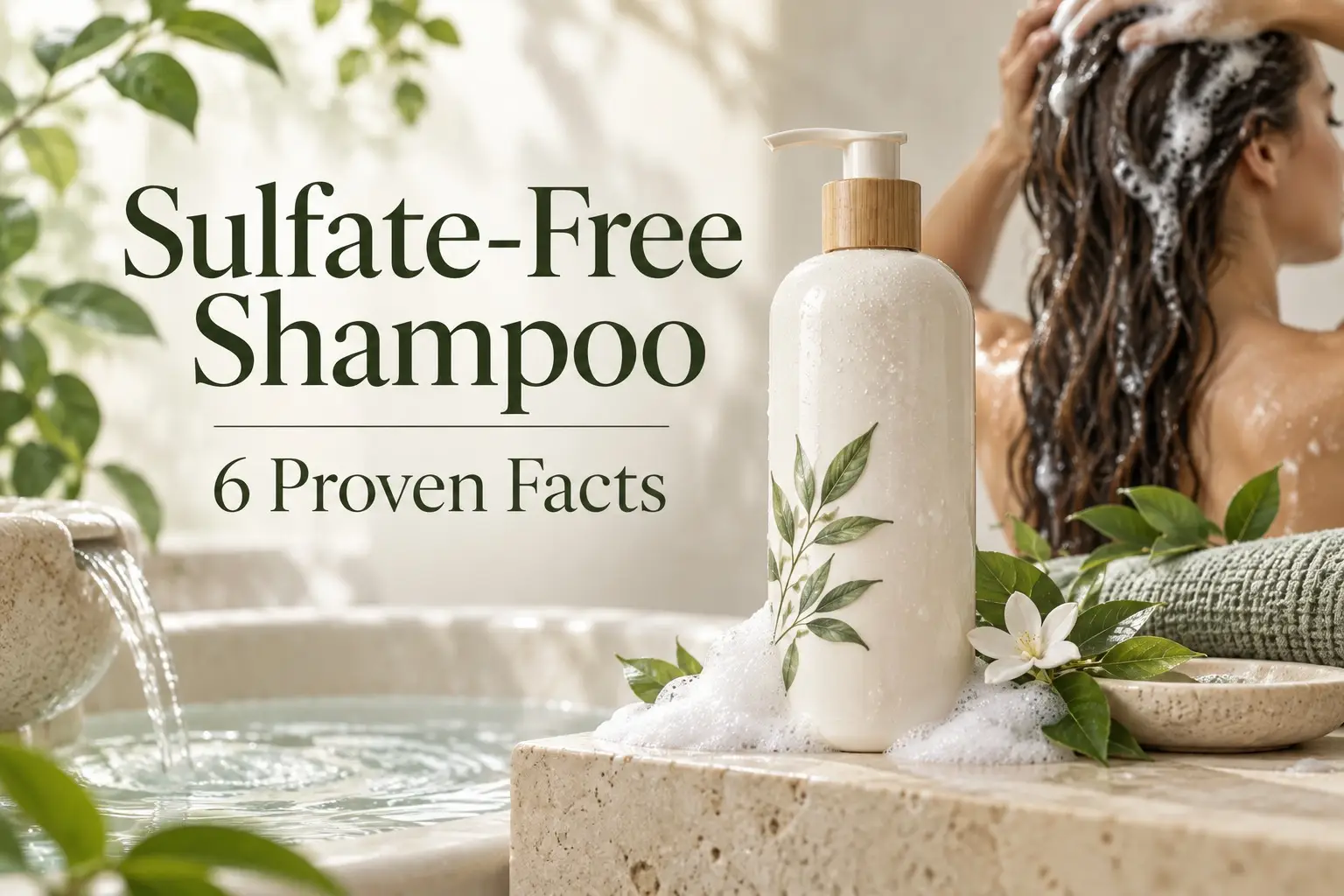
Quick Answer: Sulfate-free shampoo uses milder cleansing agents instead of sulfates like SLS and SLES. Sulfates aren’t dangerous, but they’re strong cleansers that can irritate sensitive scalps and strip dry hair. Sulfate-free formulas suit sensitive, dry or colour-treated hair well, while very oily scalps may still benefit from an occasional stronger wash.
Key Takeaways:
- Sulfates are effective cleansers, not toxins.
- They can irritate sensitive scalps and strip dry midlife hair.
- Sulfate-free formulas use milder surfactants and lather less.
- They’re well suited to dry, sensitive or colour-treated hair.
- Oily or buildup-prone scalps may still need an occasional clarifying wash.
Sulfate-free shampoo has become one of those labels people buy on reflex, often without knowing what a sulfate is or whether avoiding one helps them. The honest answer is that it depends on your scalp. Here are six facts that let you decide properly rather than follow the trend.
1. Sulfates Are Cleansers, Not Poisons
Sodium lauryl sulphate (SLS) and sodium laureth sulphate (SLES) are surfactants — ingredients that lift oil and dirt so water can rinse them away. They’re effective, cheap and produce the rich lather most of us associate with “clean.”
Much of the online fear about sulfates is overstated. The real question isn’t safety; it’s whether their strength suits your scalp.
2. Strength Is the Issue for Some Scalps
Strong cleansers can remove more oil than a scalp needs. On a sensitive or dry scalp, that can mean tightness, itching or irritation. SLS is generally considered harsher than SLES.
The British Association of Dermatologists publishes patient information on skin irritation, and the NHS contact dermatitis guidance covers when irritation needs attention.
3. Sulfate-Free Shampoo Suits Drier Midlife Hair
As oil production shifts around menopause, many women find their lengths drier and their scalps more reactive — the pattern I explain in the oestrogen drop. A gentler cleanser removes less of the oil that dry hair needs.
It’s also kinder to colour, which tends to fade faster with strong surfactants.
4. Less Lather Doesn’t Mean Less Clean
Sulfate-free formulas use milder surfactants, such as glucosides and betaines, which foam less. People often assume they’re not working and use far too much, or wash twice.
Lather is a sensation, not a measure of cleaning. Massage well at the scalp with your fingertips and rinse thoroughly — technique matters more than foam, as I cover in how often to wash hair.
5. Oily and Buildup-Prone Scalps Need a Plan
Gentle cleansers can struggle to remove heavy residue, especially in hard-water areas where lathering is weaker anyway. If you switch and your roots start feeling heavy, you may be accumulating buildup.
The fix isn’t abandoning sulfate-free — it’s an occasional clarifying wash, as set out in scalp buildup.
6. Match the Shampoo to the Scalp, Not the Trend
A simple guide:
- Sensitive or itchy scalp — sulfate-free is often a good move
- Dry or colour-treated hair — sulfate-free usually helps
- Very oily scalp — a standard shampoo may suit you, or sulfate-free with regular clarifying
- Balanced scalp — either can work; choose by how your scalp feels
Scalp types are explained in the skinification of hair.
A Word on Everything Else in the Bottle
Removing sulfates doesn’t automatically make a shampoo gentle. Fragrance, preservatives and heavy conditioning agents matter too. Read the whole label — the principles are in scalp serum ingredients.
If irritation continues whatever you use, see your GP or a dermatologist; persistent itching and flaking can be a treatable condition rather than a product issue.
The Minimalist Verdict
For many women over 40, a sulfate-free shampoo is a sensible default: gentler on the scalp, kinder to dry lengths and colour. Just keep a clarifying wash in the cupboard, and judge by how your scalp feels after two or three weeks.
Nunu Moor is our commercial botanical scalp-and-hair care brand. Join the Nunu Moor launch waitlist for launch updates, early access and founder pricing. The tonic is a cosmetic product, not a treatment for hair loss.
FAQ:
- Is sulfate-free shampoo better for hair? It’s better for some hair. It suits sensitive, dry or colour-treated hair well, while very oily scalps may prefer stronger cleansing or regular clarifying.
- Are sulfates bad for your hair? Sulfates aren’t harmful, but they’re strong cleansers that can irritate sensitive scalps and strip dry hair.
- Why doesn’t sulfate-free shampoo lather much? It uses milder surfactants that foam less. Lather isn’t a measure of cleaning, so massage well and rinse thoroughly.
- Does sulfate-free shampoo cause buildup? It can struggle with heavy residue, especially in hard water. An occasional clarifying wash solves this.
- Is sulfate-free shampoo good for thinning hair? It can help by being gentler on the scalp and less stripping, but it won’t treat the cause of thinning.