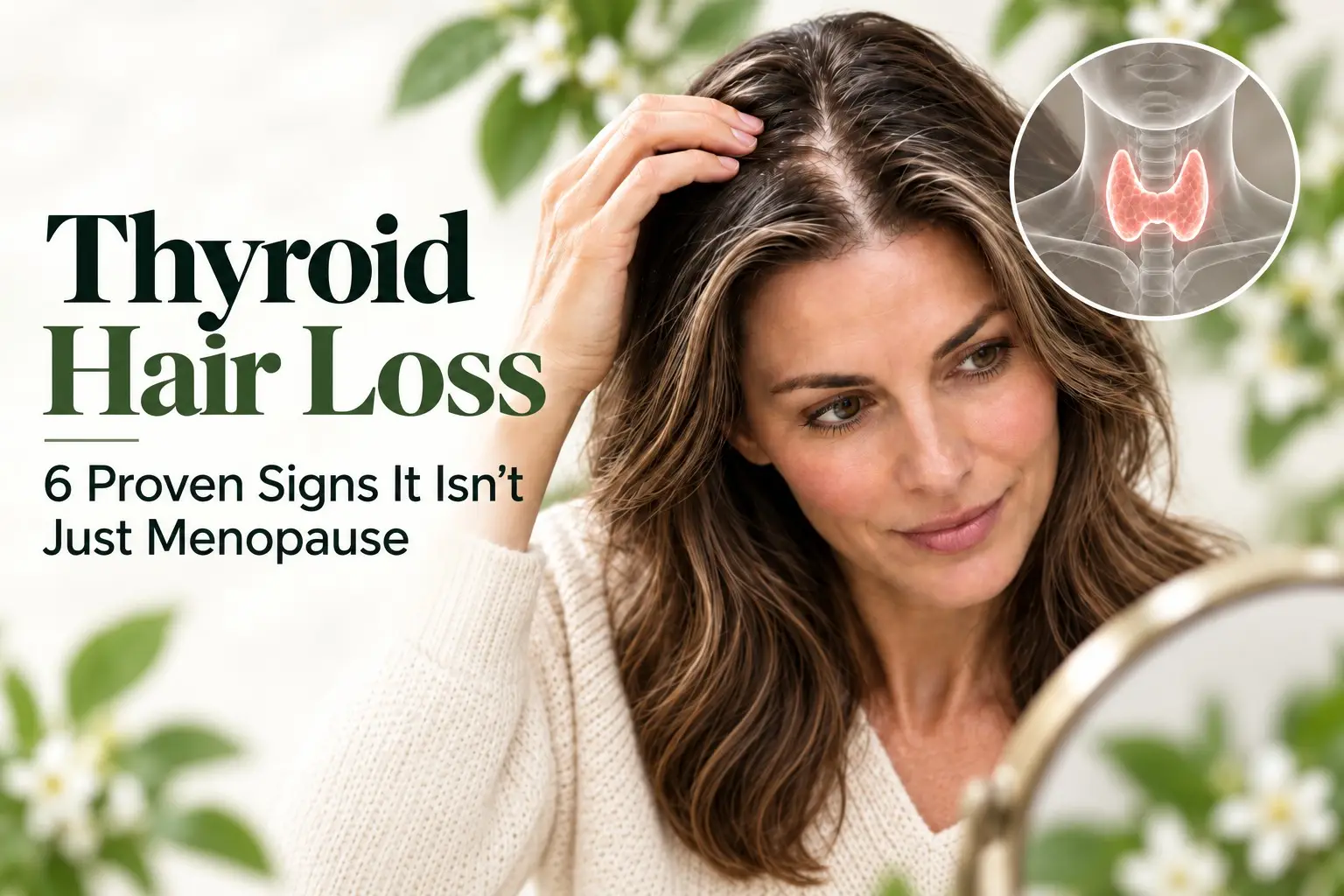
Quick Answer:Thyroid hair loss causes diffuse, all-over thinning that looks almost identical to menopausal thinning, and the wider symptoms overlap too. The only reliable way to tell them apart is a blood test. If you’re losing hair in midlife, ask your GP to check thyroid function alongside iron, ferritin and vitamin D.
Key Takeaways:
- Thyroid problems and menopause both cause diffuse thinning, not bald patches.
- Their wider symptoms overlap heavily — fatigue, weight change, mood, dry skin.
- You cannot tell them apart yourself; a blood test is the answer.
- Thyroid-related hair loss is very treatable once diagnosed.
- Ask for thyroid function plus iron, ferritin and vitamin D together.
Thyroid hair loss is one of the most commonly missed explanations for thinning in midlife — because it looks so much like menopause that most women never think to check. Picture the scenario: you’re in your late 40s, your hair is thinning, you’re exhausted, you’ve gained weight you can’t explain, and you feel low. You assume it’s menopause. Reasonably so. But that exact cluster is also the classic picture of an underactive thyroid — and one of those is a simple blood test away from a very treatable diagnosis.
Here are the six signs worth knowing.
1. The Thinning Pattern Looks the Same
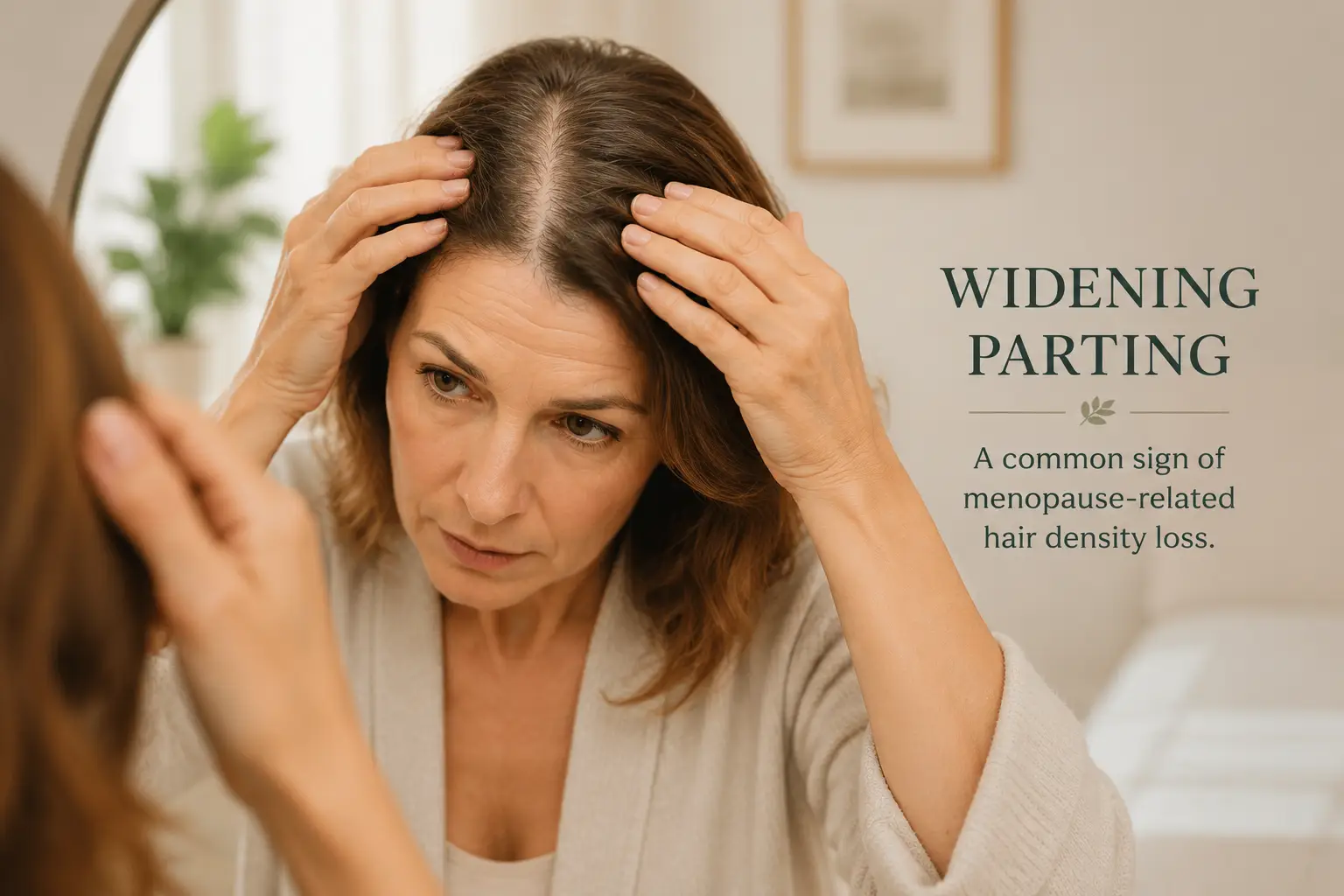
Both conditions typically cause diffuse thinning — hair coming out all over the scalp, a smaller ponytail, a wider parting — rather than distinct bald patches. So the pattern alone tells you nothing about which one you’re dealing with. This is the first reason self-diagnosis fails.
2. Thyroid Hair Loss Comes With Overlapping Symptoms
The accompanying symptoms overlap almost point for point. An underactive thyroid can cause fatigue, weight gain, feeling cold, dry skin, low mood, brain fog and thinning hair. Read that list again — it’s practically indistinguishable from how many women describe perimenopause, which I cover in the guide on why your hair texture changes at 45.
3. The Timing Overlaps Too
There’s a cruel extra layer: thyroid disorders become more likely with age and disproportionately affect women, arriving around the same time menopause does. It’s entirely possible to have both at once — which is precisely why guessing is a mistake.
4. Only a Blood Test Can Tell Them Apart
You cannot reliably distinguish thyroid hair loss from menopausal thinning by symptoms, by mirror, or by reading blogs — including this one.
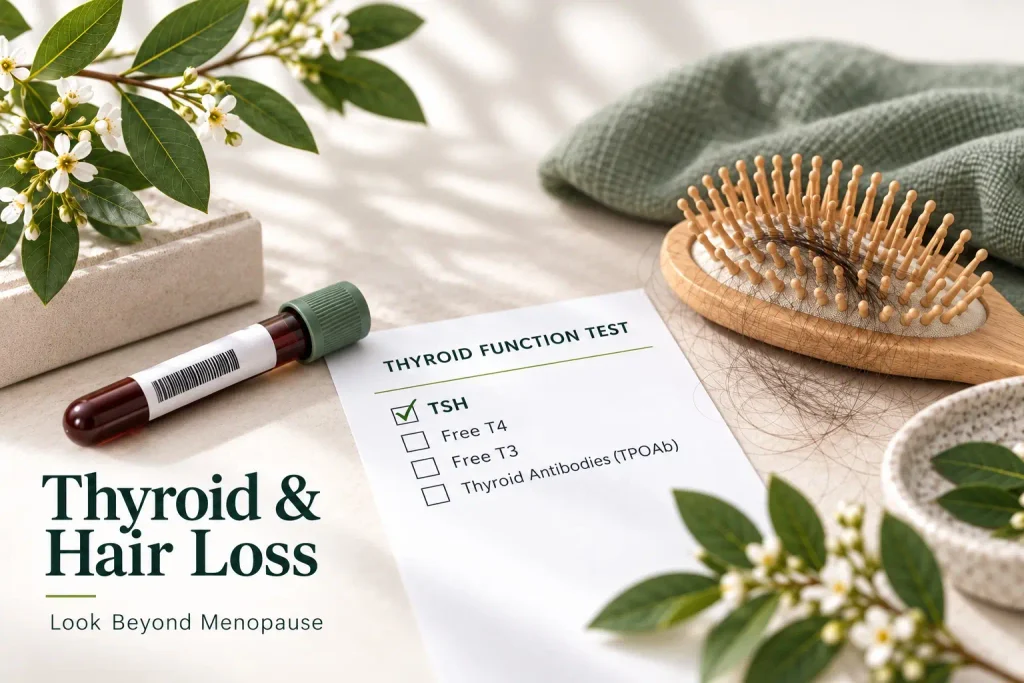
A thyroid function test measures the hormones that tell your GP whether your thyroid is underactive or overactive (both can affect hair). The NHS guidance on an underactive thyroid explains what’s tested and why. It’s routine and inexpensive.
Either way you win: an abnormal result means a treatable cause found; a normal result rules out a major worry.
5. Thyroid Hair Loss Is Usually Reversible
Here’s the genuinely hopeful part. Once the thyroid is diagnosed and treated back to normal levels, hair frequently recovers over the following months. The charity Thyroid UK has useful patient information on what to expect from treatment.
That’s a very different outlook from hormonal menopausal thinning, which is gradual and harder to reverse — so knowing which you have genuinely changes your options.
6. Thyroid Isn’t the Only Impostor
Ask for a panel rather than a single test, because other treatable causes mimic menopause too:
- Thyroid function — under- or overactive
- Ferritin — iron stores, one of the most common causes of thinning in women
- Full blood count — to check for anaemia
- Vitamin D — widely low in the UK
Frame it as: “I’m losing hair and I’d like to rule out the common treatable causes.” If you have heavy periods, eat plant-based, or have a family history of thyroid problems, mention it.
How to Read Your Results
If your thyroid is off: it’s identified and treatable, and hair often recovers as levels normalise.
If everything’s normal: menopause is the likelier explanation, and you can focus there — the oestrogen drop guide is a good next read. You’ve also gained real peace of mind.
If you have both: manageable — and exactly why you tested rather than assumed.
Where Scalp Care Fits
Nunu Moor is our commercial botanical scalp-and-hair care brand. Its tonic is a cosmetic product, not a treatment for thyroid conditions or hair loss.
For launch updates, early access and founder pricing, join the Nunu Moor launch waitlist.
The single most useful thing this post can do is send you for a blood test instead of settling for “it’s probably just menopause.” It might be. It might be your thyroid. You deserve to know which.
This is general information, not a diagnosis. Please see your GP for blood tests and personalised advice.
FAQ:
- How do I know if my hair loss is thyroid or menopause? You can’t tell reliably from symptoms alone. The only dependable way is a blood test — ask your GP to check thyroid function alongside iron, ferritin and vitamin D.
- Does an underactive thyroid cause hair loss? Yes. Hypothyroidism commonly causes diffuse thinning, along with fatigue, weight gain, dry skin and low mood.
- Can you have thyroid problems and menopause together? Yes. Thyroid disorders become more likely around the same age menopause arrives.
- Does thyroid hair loss grow back? Often yes. Once treated back to normal levels, hair frequently recovers over the following months.
- What blood tests should I ask for? Thyroid function, ferritin, a full blood count and vitamin D.