QUICK ANSWER
Telogen effluvium is temporary, diffuse hair shedding that happens when a stressor — illness, surgery, childbirth, emotional stress or a nutritional trigger — pushes many follicles into the resting phase at once. Shedding usually starts two to three months after the trigger and, crucially, is reversible: hair typically regrows once the cause is resolved.
KEY TAKEAWAYS
- Telogen effluvium (TE) is sudden, all-over shedding — not bald patches.
- It’s triggered by a shock to the system, and shedding is delayed 2–3 months.
- It’s temporary and reversible: hair regrows once the trigger passes.
- It won’t make you bald; it thins density for a while.
- Persistent, patchy or worsening loss needs a GP — TE isn’t the only cause.

Let me start with the sentence you most need to hear, because I know some of you are reading this with your heart in your throat: what you’re going through is very likely temporary, and your hair will very likely grow back. Sudden, dramatic shedding is one of the most frightening things that can happen to your hair — handfuls in the shower, strands all over the pillow, a plughole that makes you want to cry. So before anything else: breathe. There’s a name for this, it’s common, and it’s usually reversible.
That name is telogen effluvium. Let me explain exactly what’s happening, why it’s so alarming, and — the part that matters most — when it stops.
What telogen effluvium actually is
Your hair grows in a cycle. At any given time, most of your hairs (around 85–90%) are in the active growing phase, while a small minority are in the resting phase, called telogen, before they naturally shed and are replaced. This is normal and constant — everyone sheds a bit every day.
Telogen effluvium happens when something shocks a large number of your follicles into that resting phase all at once, ahead of schedule. Weeks later, those hairs all shed together — far more than the usual daily trickle. The result is sudden, diffuse thinning: hair coming out all over the scalp, not in patches. It’s the volume and suddenness that makes it so frightening, even though the mechanism is your hair cycle being temporarily knocked out of rhythm, not destroyed.
The delay that confuses everyone
Here’s the detail that catches almost everyone out: the shedding is delayed. Telogen effluvium typically shows up two to three months after the triggering event — sometimes longer. So the stressful period is often over and forgotten by the time your hair starts falling.
This delay is why so many women feel blindsided (“nothing’s even wrong right now!”) and why the cause can be so hard to spot. If you’re shedding heavily today, the trigger was likely a couple of months ago. Common triggers include:
- A high fever or significant illness (including infections)
- Surgery or a general anaesthetic
- Childbirth (post-partum shedding is classic telogen effluvium)
- A major emotional stress — bereavement, divorce, job loss, acute anxiety
- Crash dieting or a sudden nutritional shortfall
- Starting or stopping certain medications
- A significant hormonal shift
Cast your mind back two to three months, and the culprit often reveals itself.
The reassuring part: it’s reversible
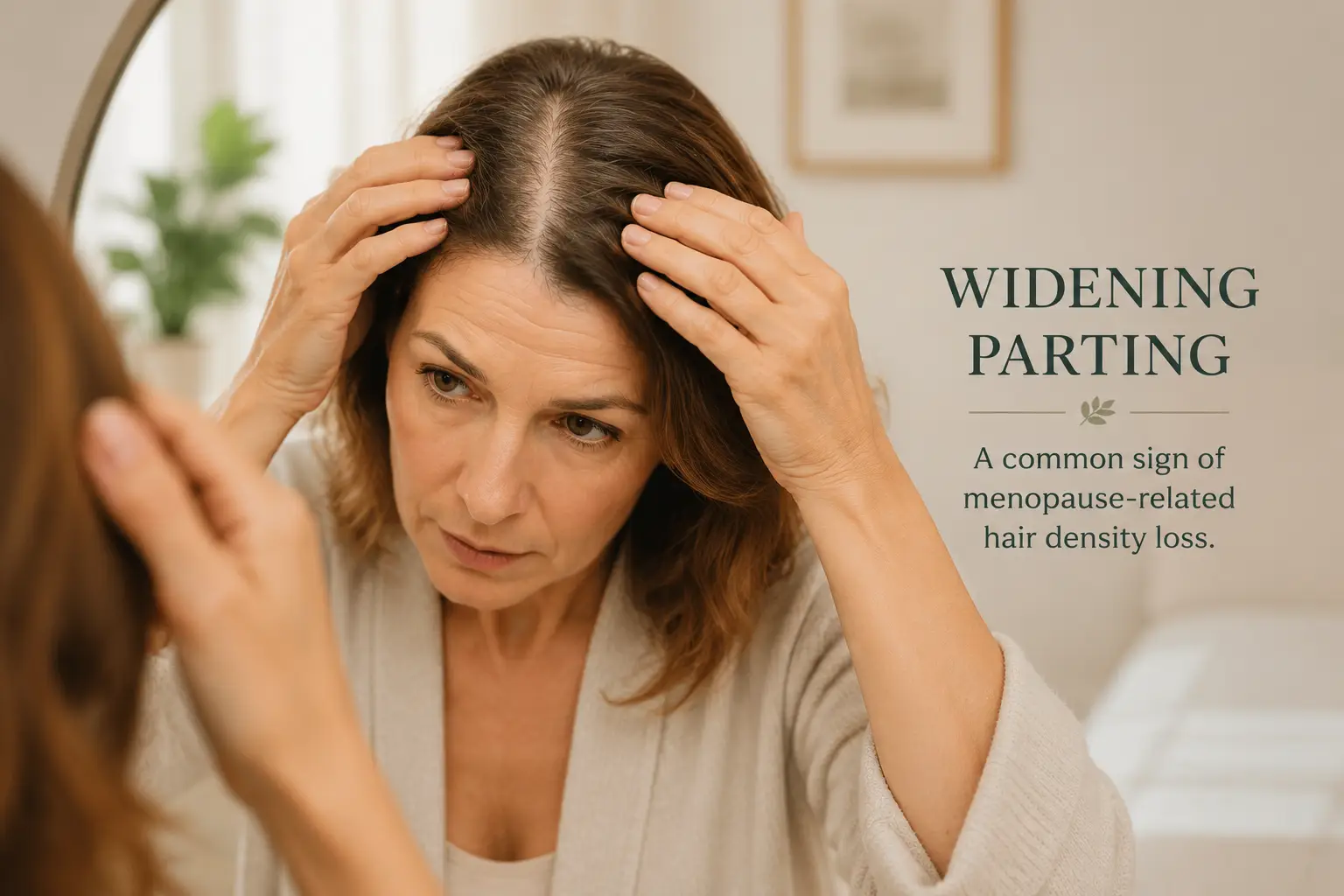
This is the heart of it. Telogen effluvium is temporary and, in the common (acute) form, it does not cause baldness. It reduces your density for a while — your ponytail feels thinner, your parting looks wider — but the follicles aren’t gone. They’ve just rested, shed, and are getting ready to grow again.
Once the underlying trigger has passed and been resolved, shedding usually settles within a few months, and regrowth follows. Many people notice the shedding easing around three to six months from when it started, with new baby hairs coming through after that. It can take a while for full density to return, and patience is genuinely hard when you’re anxious — but the direction of travel is recovery.
How to tell it apart from other hair loss
Telogen effluvium has a recognisable signature, and knowing it can be reassuring:
- It’s diffuse, not patchy. Hair thins all over, rather than in distinct bald spots. Round patches of complete loss point to something different (alopecia areata) and need a doctor.
- It’s shedding, not gradual thinning. TE is rapid and dramatic. Female-pattern hair loss, by contrast, is a slow thinning over years, usually at the crown and parting.
- It doesn’t take your hairline or cause total baldness. In the common form, it thins density temporarily.
That said — and this matters — you can’t always self-diagnose, and TE isn’t the only cause of shedding. Which brings me to the important bit.
When to see a doctor (please do)
Reassurance is not the same as “ignore it.” See a GP if your shedding is severe, lasts beyond six months, comes with patchy loss, or is accompanied by other symptoms. There’s a very good reason: the things that mimic or cause TE — low iron and ferritin, thyroid problems, vitamin D deficiency — are common in women and eminently treatable, and catching them makes a real difference. Ask for a blood panel. If a deficiency or thyroid issue is driving the shedding, correcting it is often what turns things around.
So: be reassured, and get checked. Both, not either.
What actually helps while you wait
The frustrating truth is that the main “treatment” for telogen effluvium is identifying and removing the trigger, plus time and reassurance. But you’re not powerless:
- Address the trigger. If it was stress, prioritise recovery. If it was a crash diet, eat properly. If it might be a deficiency, get tested.
- Eat to support regrowth. A balanced diet with enough protein, iron and key nutrients gives the recovering follicles their raw materials.
- Be gentle. Don’t add breakage on top of shedding — loosen tight styles, handle wet hair kindly, ease off heat.
- Care for the scalp. A healthy, well-circulated, calm scalp is the best environment for the regrowth that’s coming. Gentle scalp massage feels good and supports blood flow.
- Try not to panic-shop. Frantically switching products rarely helps and can irritate the scalp. Steady, gentle care wins.
A calm foundation for the regrowth ahead
The recovery from telogen effluvium happens at the scalp — it’s where your resting follicles will wake and regrow. Giving that scalp a calm, nourished, well-supported environment is one of the kindest things you can do while you wait, and it’s exactly the thinking behind Kartee’s Hair Tonic: a gentle, botanical, scalp-first formula designed to support the scalp environment. It’s still in development, made with care for hair over 40.
If you’d like calm, honest guidance through this — and to know when the Tonic is ready — join the waitlist at kartee.salon. You’ll be first to hear, and you’ll get more reassuring, science-led support along the way.
I’ll end where I began, because it’s the thing to hold onto: telogen effluvium is a storm, not a permanent state. The shedding feels catastrophic and the anxiety is real — but your follicles are resting, not lost, and the overwhelming likelihood is that your hair is on its way back.
This post covers a distressing topic. If your hair loss is causing significant anxiety or low mood, please know that’s completely understandable — and speaking to your GP about both your hair and how you’re feeling is a good step.
FAQ
What is telogen effluvium? It’s temporary, diffuse hair shedding that happens when a stressor pushes many follicles into the resting phase at once. They shed together weeks later, causing sudden all-over thinning.
Is telogen effluvium reversible? Yes. In its common form it’s temporary and doesn’t cause baldness. Hair typically regrows once the underlying trigger has passed and been resolved.
How long does telogen effluvium last? Shedding often eases within three to six months once the trigger is resolved, with regrowth following, though full density can take longer to return.
Why did my hair start shedding months after a stressful event? The shedding in telogen effluvium is delayed, typically appearing two to three months after the trigger, which is why the cause is often hard to spot.
When should I see a doctor about shedding? See a GP if shedding is severe, lasts beyond six months, is patchy, or comes with other symptoms — treatable causes like low iron or thyroid issues can mimic telogen effluvium.