| QUICK ANSWER Stress hair loss happens when a period of significant stress pushes many hairs into their resting phase, so they shed together a few months later. The shedding then becomes a new source of worry, which keeps stress high — a loop. Breaking it means easing the stress itself and calming the hair anxiety, knowing that stress shedding is usually temporary. |
The salon chair is a strange place. People tell their hairdresser things they don’t tell anyone else. Over the years, the conversations in mine have drifted further and further from hair — to sleep, to work, to grief, to the books and podcasts that got someone through a bad year.
Because so often, when a client’s hair is falling out, what she really wants to talk about is everything else.
How Stress Hair Loss Happens
A period of real strain — a bereavement, a divorce, a job that’s grinding you down, a long illness in the family — can push a large number of hairs out of their growing phase and into rest at the same time. A few months later, they let go together.
That’s telogen effluvium , and it’s the most common form of stress hair loss. The delay is what makes it so confusing: by the time the hair comes out, the worst of the stress may already be behind you.
The Loop
Here’s the cruel part, laid out plainly:
- a stressful stretch pushes hairs into rest
- months later, they shed — out of nowhere, it seems
- the shedding frightens you
- that fear becomes a new, constant source of stress
- and ongoing stress keeps the hair cycle unsettled
The worry about losing hair becomes part of what keeps it going. Which means calming the worry isn’t a nice extra. It’s part of the treatment.
Easing the Stress Itself
You can’t always remove what’s causing it. You can change how your body carries it, and the basics genuinely help.
Sleep. Poor sleep and stress feed each other. Protecting your sleep is one of the most useful things you can do — I’ve written about sleep and hair loss separately.
Move. It doesn’t need to be intense. Walking counts.
Breathe on purpose. Slow breathing, a few minutes of quiet, meditation if it suits you. It calms the nervous system in the moment.
Talk. To someone you trust, or to a professional. The NHS Every Mind Matters page on stress has practical ideas and explains when to get help.
Easing the Hair Anxiety
Get the facts. Much of the fear is fear of the unknown. Knowing that stress shedding is usually temporary takes a lot of the panic out of it.
Get checked. See your GP and ask for bloods — iron, thyroid, vitamin D. It might find something treatable. If it doesn’t, you can stop wondering. The NHS page on hair loss explains when to go.
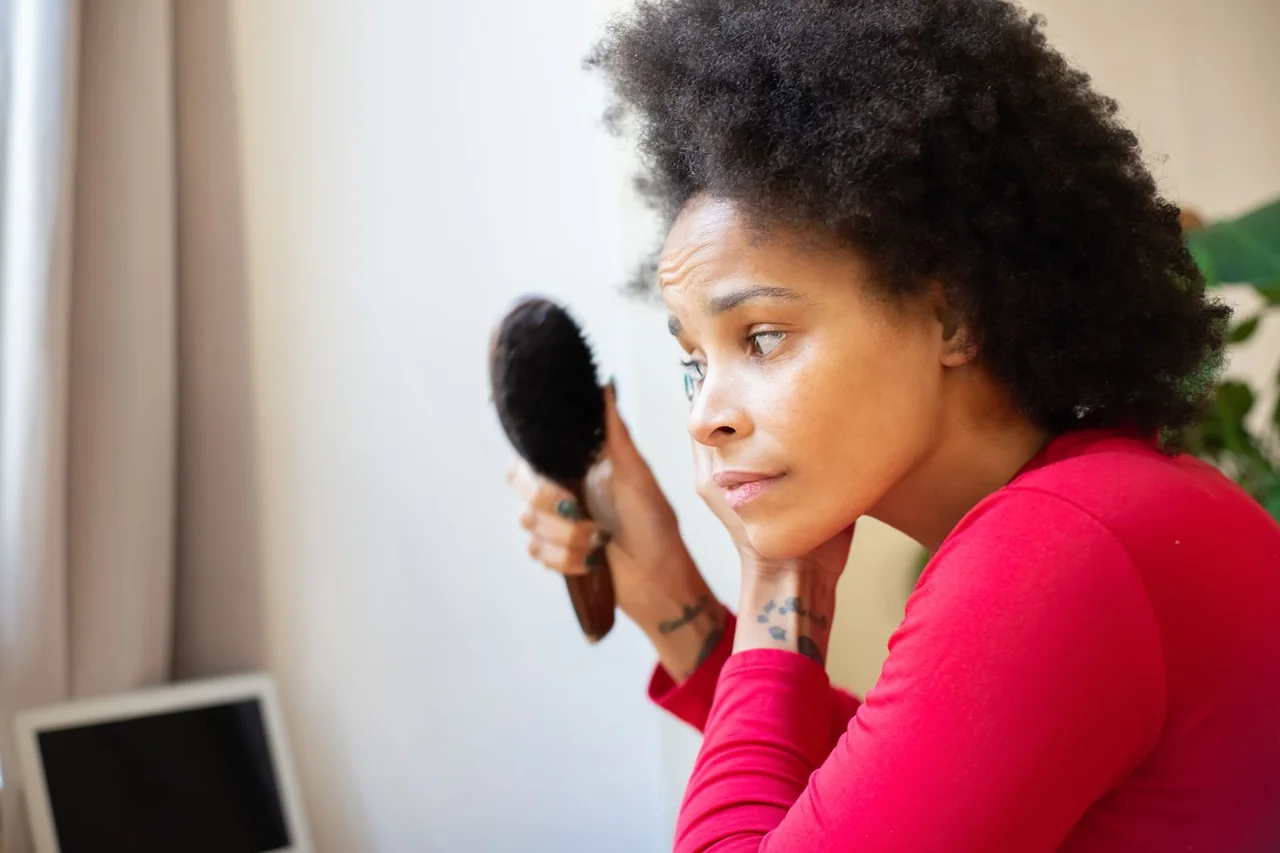
Stop the checking. Counting hairs in the plughole, photographing your parting every morning, tugging to see what comes out. It feels like control. It keeps your alarm switched on.
Be kind to yourself. Minding about your hair isn’t vanity. It’s tied up with who you are. I say more about that in hair loss confidence .
A Ritual Instead of an Inspection
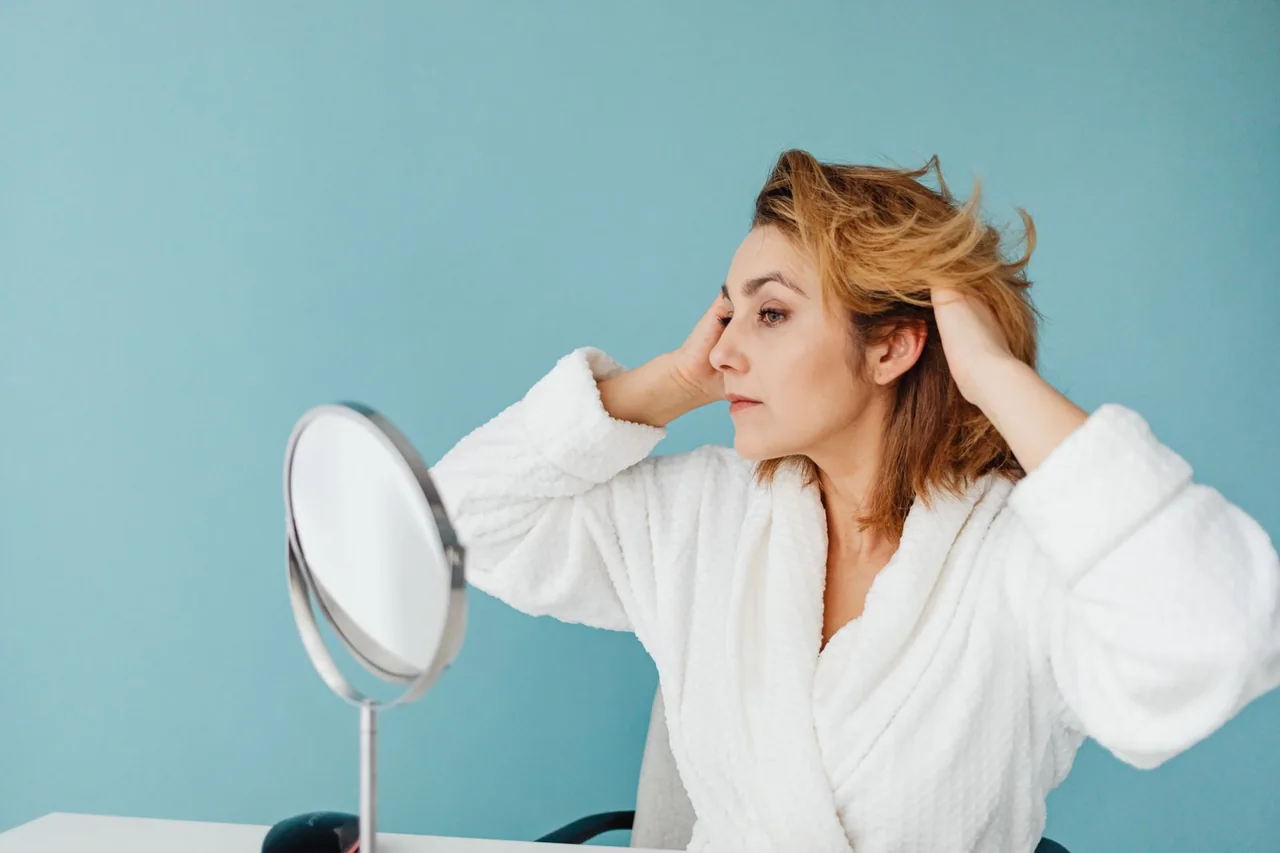
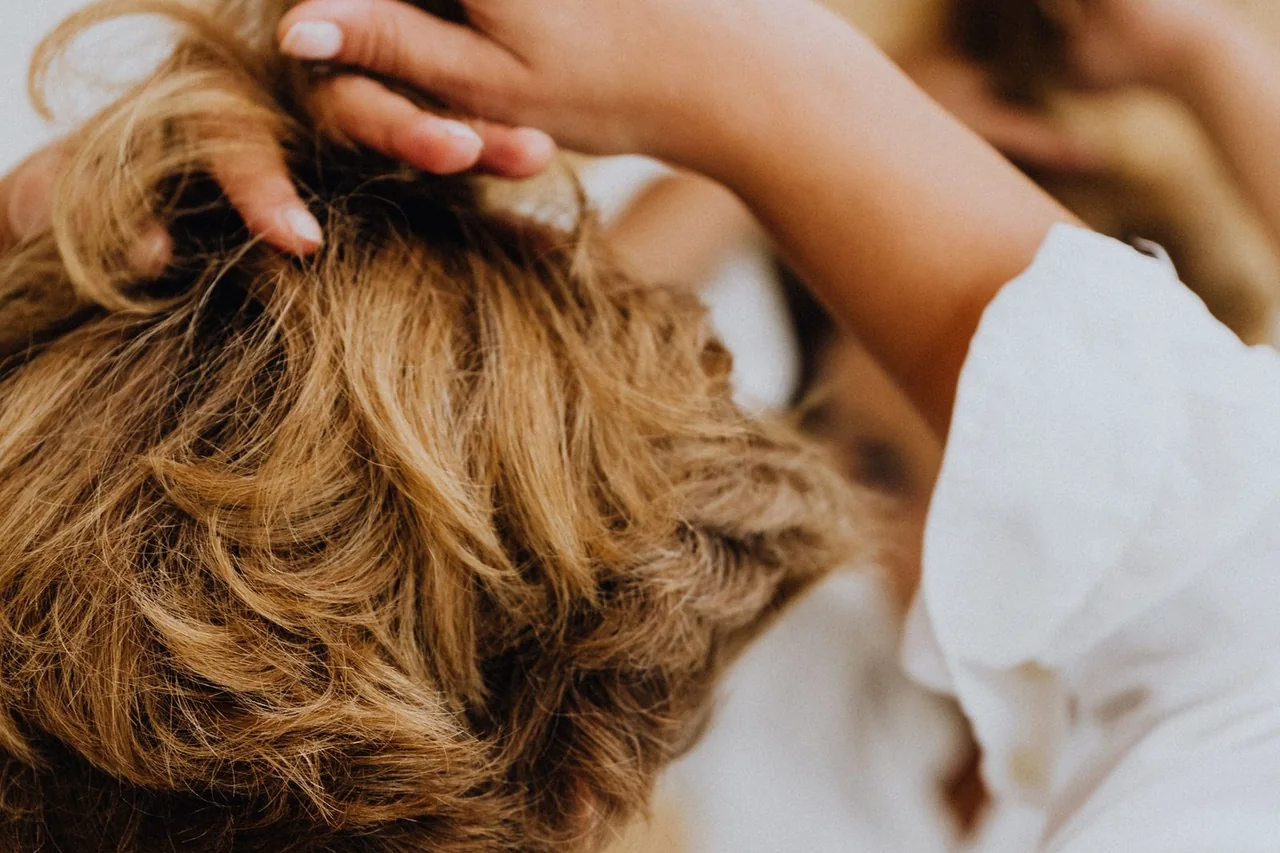
One thing I suggest to anxious clients: swap the daily inspection for a daily minute of care. Fingertips on the scalp, slow circles, slow breathing. It’s good for the scalp and it’s good for you — the how-to is in scalp massage for hair growth .
That’s partly what I had in mind with Nunu Moor: a botanical scalp and hair tonic that turns a minute in front of the mirror into something calm rather than something anxious. It won’t stop shedding. It can make the waiting kinder. Join the Nunu Moor waitlist to hear when it’s out.
Stress hair loss is real, but it’s rarely permanent. Ease the stress, ease the fear, give it time. The moment the worry loosens its grip, you’ve already started to break the loop.
If stress or anxiety is affecting your wellbeing beyond your hair, please talk to your GP. Support is available.
Frequently Asked Questions
Can stress really cause hair loss?
Yes. Significant stress can push many hairs into their resting phase, and they shed together a few months later. This is called telogen effluvium.
How long after stress does hair fall out?
Usually two to four months after the stressful period, which is why the link is easy to miss.
Does worrying about hair loss make it worse?
It can. Ongoing anxiety is itself a stressor, which can keep the hair cycle unsettled.
Is stress hair loss permanent?
Usually not. It tends to settle once the stress eases, and the hair grows back.
What helps stress hair loss?
Protecting sleep, moving regularly, slow breathing, talking to someone, getting your bloods checked, and cutting down on hair-checking.