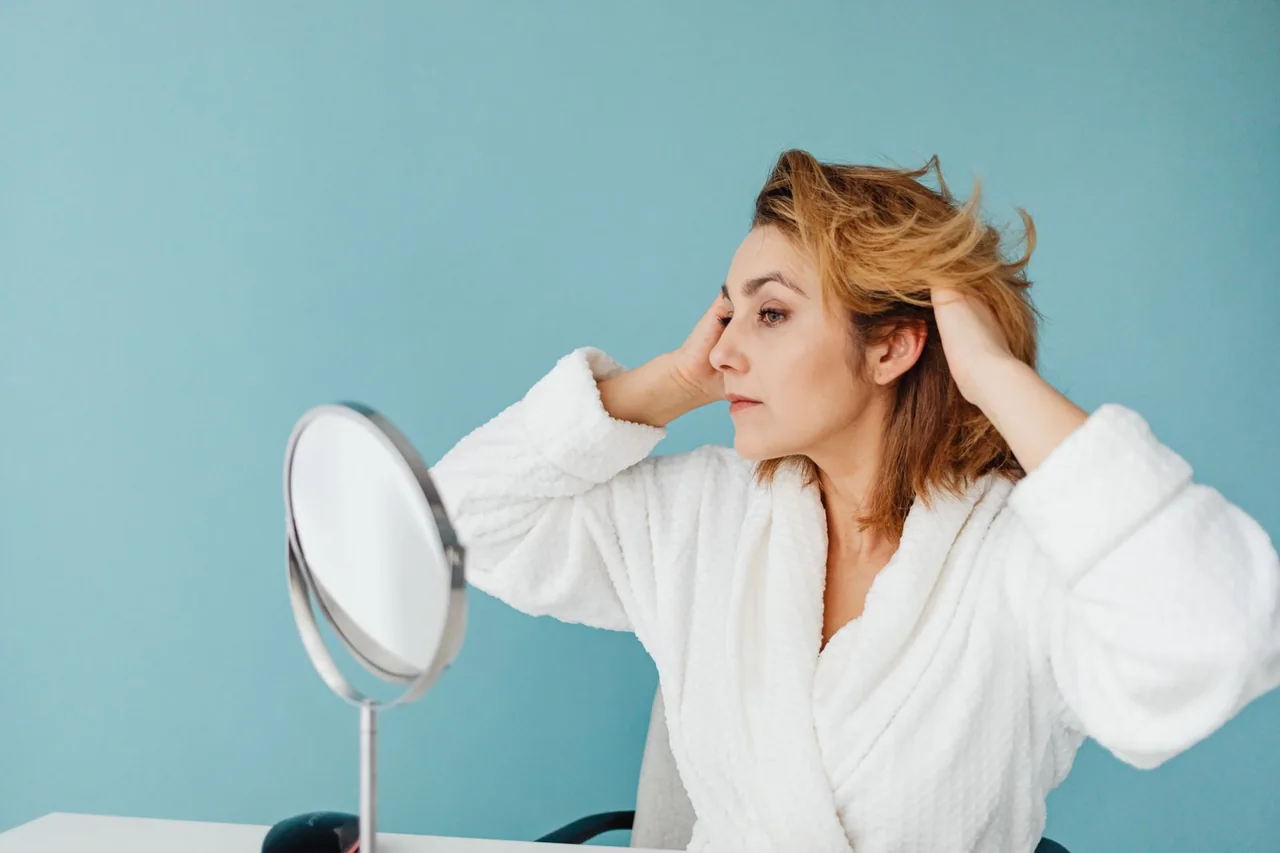
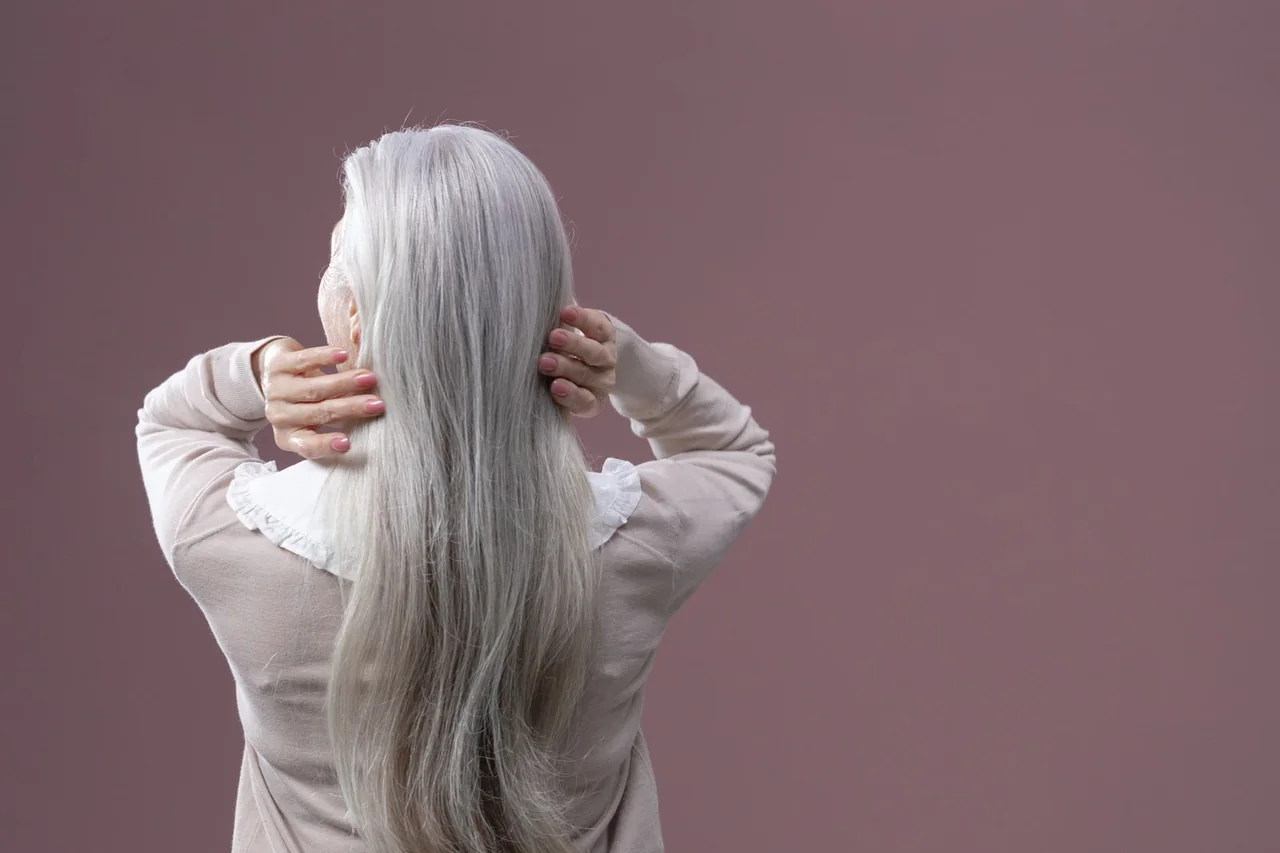
| QUICK ANSWER Grey hair texture changes in menopause because a strand that has lost its pigment is often coarser, drier and more porous, and falling oestrogen means less natural oil reaches the lengths. The result is hair that feels wiry and won’t lie down. Lightweight moisture, gentle washing and lower heat soften it far better than heavy silicone products. |
Clients apologise for their grey. “Sorry, I’m overdue.” “Sorry, it’s a mess.” I wish they wouldn’t. Grey hair can be beautiful. It just behaves differently, and most of us were never told how to look after it.
What usually bothers people isn’t the colour anyway. It’s the grey hair texture — the feel. Strands that stand up on their own, that won’t take a curl and won’t lie flat, that feel like they belong to someone else.
Why Grey Hair Feels Wiry
Grey is really the absence of colour. As the pigment cells in the follicle wind down, the hair grows through without melanin. But the follicle often changes how it builds the strand at the same time, and grey hairs tend to be coarser, drier and more porous than the ones they replace.
Porous means the hair takes in and loses moisture easily. It frizzes in damp weather, dries out in central heating, and grabs onto whatever products you put on it.
Grey Hair Texture in Menopause: The Double Hit
Here’s why it often feels so much worse in your late forties and fifties. The greys tend to arrive at the same time as the hormonal shift, and that shift changes how much natural oil makes it down the hair. I explain that side of it in perimenopause hair changes .
So you’ve got a strand that’s naturally drier and coarser, on a scalp that’s sending less conditioning oil down it. No wonder the old routine stopped working.
The Silicone Trap
The instinct is to smooth it down with something heavy. Serums, smoothing creams, anything that promises glass-like shine. Most of them get that instant effect from heavier silicones that coat the outside of the hair.
For an evening out, fine. As a daily habit, they tend to build up on porous grey hair, which leaves it dull, heavy and somehow still dry underneath — and then you reach for more. Lighter, water-soluble silicones are a different matter. It’s the heavy, daily ones that cause the trouble.
What Softens It
Wash gently. A harsh shampoo strips what little oil there is. A gentler one, used on the scalp rather than scrubbed through the lengths, makes a real difference — I explain what to look for in sulfate-free shampoo .
Moisture that doesn’t weigh it down. Ingredients that draw water in, such as glycerin and aloe, and a small amount of light oil on the mid-lengths and ends. Keep anything rich away from the roots.
Turn the heat down. Grey hair is more fragile, and in my experience very high heat can leave it with a slightly yellow cast. A lower setting and a heat protectant every time — more on that in heat styling for fine hair .
Get the cut right. Coarser hair often holds shape beautifully once it’s cut to work with its texture rather than against it. Something a little shorter, a little more textured, often suits grey far better than the style that suited your old colour.
To Colour or Not
That’s entirely your call, and I’ll happily do either. If you colour, softer blended shades are kinder to the eye than a solid dark colour that shows every millimetre of regrowth.
And please do the patch test, every time, even if you’ve coloured your hair for twenty years. Reactions to hair dye can develop after years of use. The NHS page on hair dye reactions explains why, and the British Association of Dermatologists has more on skin allergies.
Work With What You Have
So much grey-hair frustration comes from trying to make it behave like the hair you had at thirty. It won’t, and that’s not a failure. Well-looked-after grey hair can be soft, glossy and full of movement. It just needs a different rulebook.
That’s partly why I made Nunu Moor silicone-free — a botanical scalp and hair tonic with heat protection built in, so it looks after the scalp and lengths without the heavy coating. It isn’t out yet; join the Nunu Moor waitlist to hear first.
Your grey hair texture in menopause isn’t a problem to be smothered. It’s a new texture to learn. Learn it, and it’ll reward you.
Frequently Asked Questions
Why does grey hair texture feel wiry?
As pigment fades, the follicle often produces a coarser, drier, more porous strand, so grey hair tends to feel rougher and stand away from the head.
Does menopause change grey hair texture?
It can make it feel worse, because hormonal changes mean less natural oil reaches the lengths of the hair.
Are silicones bad for grey hair?
Heavier silicones used daily can build up on porous grey hair, leaving it dull and heavy while masking dryness. Lighter, water-soluble ones are less of a problem.
How can I soften wiry grey hair?
Wash gently, use humectants such as glycerin and aloe with a little light oil on the ends, lower your styling heat, and choose a cut that works with the texture.
Should I patch test before colouring grey hair?
Yes, every time. Reactions to hair dye can develop even after years of using the same product.